Search for korean silk peptide botox serum reviews and you will find skincare language that sounds closer to an aesthetic treatment than an everyday cosmetic. Words such as lifting, volume, silk peptide and Botox-like create an immediate impression. They do not, however, all describe the same ingredient, mechanism or level of evidence.
The useful question is not whether the packaging looks advanced. It is what the label actually tells you about the formula, what reviewers can reasonably observe and which claims remain marketing. Understanding those distinctions makes it easier to read reviews without confusing a topical serum with an injectable treatment.
What Does Korean Silk Peptide Botox Serum Mean?
The phrase combines several separate ideas. Korean identifies the skincare positioning or origin being promoted. Silk peptide describes an ingredient associated with silk protein. Serum describes a topical product format. Botox, when used in this context, is a comparison rather than proof that the product contains an injectable medicine.
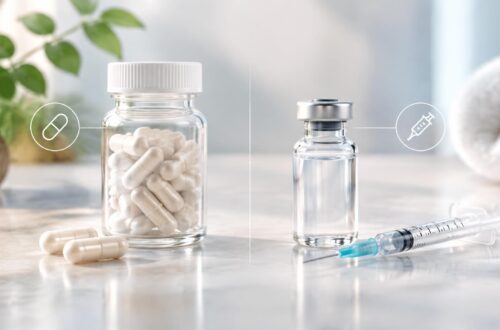
Botox-like is not the same as Botox-equivalent. A cosmetic may be marketed around smoother-looking skin without reproducing the action of a botulinum toxin treatment. The similarity suggested by the advertising should not be mistaken for a shared mechanism.
It also helps to recognise that this search phrase is not a standardised product category. Different listings may use similar keywords for different formulas, versions or packaging. A review becomes more useful when it names the exact product rather than simply calling it a Korean Botox serum.
The Sungboon Editor Ampoule Behind the Search
One product associated with this wording is the Sungboon Editor Silk Peptide EGF Heartfit Lifting Ampoule. The supplied W Cosmetics listing describes a 40ml product in syringe-style packaging and markets it as an instant Botox-like serum.
A separate Saranghae listing refers to an earlier Silk Peptide Intensive Lifting Ampoule version. That distinction matters: reviews of earlier and later versions should not automatically be treated as reviews of an identical formula.
Why the Exact Version Matters
Before comparing opinions, check the full product name, stated volume and ingredient list. Similar branding can make separate versions appear interchangeable, even when the available information does not establish that they are.
Syringe-style packaging deserves careful interpretation too. It is a presentation choice, not evidence that a cosmetic has an injectable mechanism. A topical ampoule should not be interpreted as an injectable product because of its container.
What Silk Peptide Actually Refers To
In the supplied information for the earlier listing, silk peptide refers to hydrolysed silk protein. Hydrolysed indicates that the protein has been broken down into smaller components. The name does not describe botulinum toxin.
For a shopper, the important distinction is between an ingredient identity and a promised result. Seeing silk peptide on a label tells you something about the formula, but it does not establish how visibly the finished product changes skin or how long any cosmetic effect lasts.
Reviews discussing softness, slip or the finish left on the skin may help describe the user experience. They cannot, by themselves, demonstrate deeper structural changes or confirm the advertising language around lifting.
The Botulinum-Sounding Ingredient Is Not Botulinum Toxin
The W Cosmetics product information lists 30 peptides, including sr-(Oligopeptide-91 Clostridium Botulinum Polypeptide-1). That technical name can understandably attract attention because it includes words associated with botulinum.
However, the supplied reference identifies this ingredient as a recombinant peptide, not botulinum toxin, and states that it has no muscle-relaxing action. That is the central distinction when interpreting the Botox-like positioning.
A recombinant peptide should not be presented as a topical substitute for a botulinum toxin injection. Nor does its presence justify claims that the serum freezes expression lines, relaxes facial muscles or produces an equivalent treatment effect.
Does Having 30 Peptides Prove Better Performance?
No. The number of peptides is a formula detail, not a result. An ingredient count does not reveal how the finished product performs, whether one ingredient contributes more than another or whether it outperforms a simpler formula.
For the same reason, a long technical ingredient name should not carry more weight than evidence about the actual product.
How to Interpret the Claim of 19 Clinical Tests
The supplied product information cites 19 clinical tests, but it does not provide published data. That does not establish that testing never occurred. It means the available references do not allow readers to independently evaluate the methods or findings.
A test count is not a substitute for accessible results. To assess a cosmetic claim properly, readers would need details such as:
- Which exact formula was tested.
- How the evaluation was designed.
- What outcomes were measured.
- Whether there was a comparison product or control.
- How long observations continued.
- Whether the full findings are publicly available.
Without those details, the 19-test statement should remain an attributed marketing claim rather than published proof of lifting, wrinkle correction or Botox-equivalent performance.
What Korean Silk Peptide Botox Serum Reviews Can Tell You
Customer reviews are most helpful when they describe observable aspects of using the product. Texture, packaging and compatibility with an existing routine are different questions from whether a serum reproduces a medical treatment.
Useful Details to Look For
- Texture: Does the reviewer describe a watery, silky, tacky or rich consistency?
- Finish: Does the product leave a visible sheen or noticeable residue?
- Layering: Does it sit comfortably beneath the other cosmetics the reviewer uses?
- Packaging: Is dispensing straightforward, and does the container function reliably?
- Context: Does the review identify the version and other products used alongside it?
These observations can make a review practical without turning personal experience into clinical evidence.
Claims That Need More Caution
Statements such as instant facelift, frozen wrinkles or injectable results need stronger support than enthusiastic wording. Before-and-after photographs also need context: lighting, expression, camera angle and other products can make comparisons difficult.
A reviewer may sincerely enjoy the appearance of their skin after application. That experience does not establish muscle relaxation, explain which ingredient was responsible or show that the same effect will occur for someone else.
Read the Whole Label, Not Just the Headline
Terms such as EGF, volume and lifting can dominate attention, but they do not replace a complete product description. Start with the exact version and ingredient list, then separate the stated ingredients from the benefits being advertised.
The supplied references do not establish regulatory approval for a Botox-equivalent use. Equally, a peptide ingredient should not automatically be labelled an unapproved research drug simply because its name sounds technical. Ingredient identity, cosmetic marketing and approval for a medical use are separate issues.
Price and stock status are separate again. Retail listings can change, so neither an older price nor an out-of-stock notice should be treated as evidence of effectiveness or product quality.
The Bottom Line on Korean Silk Peptide Botox Serum Reviews
The clearest way to understand this label is as cosmetic positioning, not a promise of injectable action. Silk peptide refers here to hydrolysed silk protein, while the botulinum-sounding ingredient is identified as a recombinant peptide with no muscle-relaxing action.
Read reviews for practical observations, verify the exact version and keep the unpublished 19-test claim in perspective. A serum may be appealing as a cosmetic without the Botox comparison being scientifically equivalent. Separating those ideas is the key to making sense of the label.