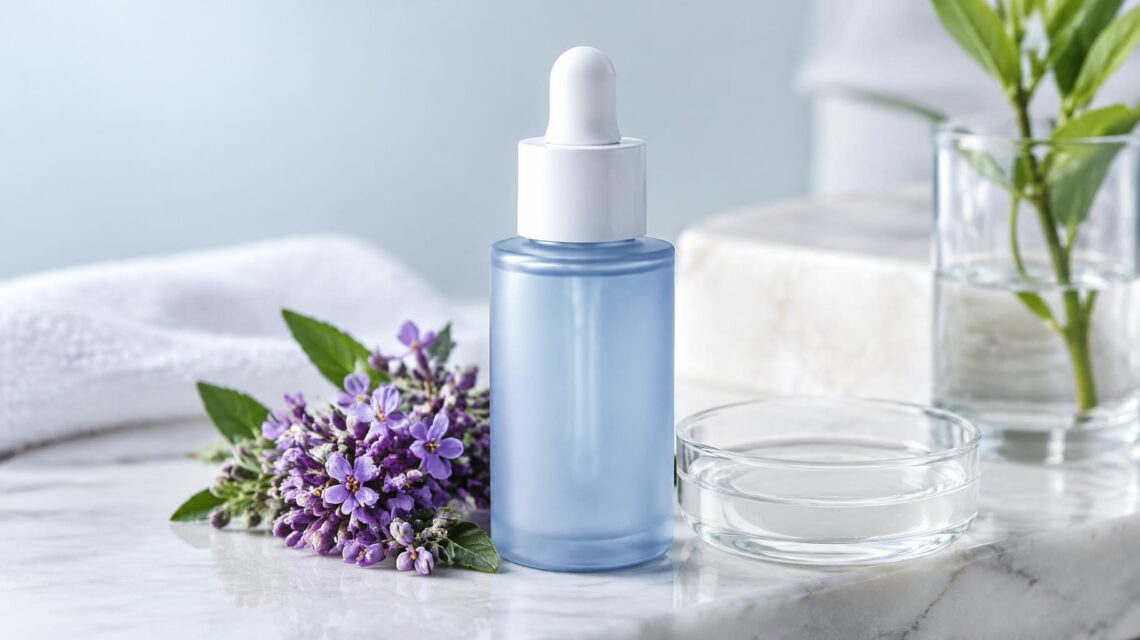
The COSRX The Blue Peptide Bakuchiol Plump Glow Serum brings together two popular skincare ingredient categories: peptides and bakuchiol. Its name may make them sound closely related, but there is an important distinction. Bakuchiol is not a peptide, and it is not retinol. It is a separate compound included alongside the peptide ingredients in this formula.
That distinction matters when evaluating what this serum contains, what its marketing suggests, and how much evidence supports its promises. Below, we unpack the formula, clarify the ingredient percentages, and explain how to assess this glow-focused serum without confusing ingredient research with proven product results.
Understanding the COSRX Blue Peptide Bakuchiol Serum
COSRX positions The Blue Peptide Bakuchiol Plump Glow Serum around the appearance of plumper, more radiant skin. The brand lists a 50 ml bottle at USD 27, although pricing and availability can vary by market and retailer.
The formula highlights copper tripeptide-1, bakuchiol, and additional peptides. These are distinct ingredients rather than interchangeable names for the same active. The product is best understood as a multi-ingredient cosmetic serum, not as a pure bakuchiol treatment or a standalone copper peptide product.
The words plump and glow describe the cosmetic positioning of the serum. They should not automatically be interpreted as evidence of structural skin changes, permanent wrinkle correction, or a medically established outcome.
Bakuchiol Is Not a Peptide
Bakuchiol is a plant-derived meroterpene phenol. Its chemical classification is different from that of peptides, which are made from linked amino acids. Including bakuchiol in a peptide serum does not change what it is.
This is more than a technical naming issue. Skincare discussions often group ingredients by the benefits they are marketed to provide, even when their chemistry differs significantly. That can make an ingredient combination sound like one unified technology when it actually contains several separate components.
Bakuchiol Is Not Retinol Either
Bakuchiol is often discussed alongside retinol in beauty content, but bakuchiol and retinol are different compounds. Calling bakuchiol natural retinol blurs that distinction and can imply equivalence that the supplied product information does not establish.
For this COSRX serum, the clearest description is straightforward: it contains bakuchiol alongside copper tripeptide-1 and other peptides. That identifies the ingredients accurately without suggesting that bakuchiol belongs to the retinoid family or delivers identical results.
What Is in the COSRX Peptide and Bakuchiol Formula?
The brand page provides specific concentrations for two headline ingredients. These figures are useful because retailer listings can sometimes describe the same product differently.
- Copper tripeptide-1: listed at 0.5%, equivalent to 5,000 ppm.
- Bakuchiol: listed at 0.25%, equivalent to 2,500 ppm.
- Additional peptides: the brand describes a 5 multi-peptide complex and names acetyl hexapeptide-1, acetyl hexapeptide-8, heptapeptide-4, and octapeptide-3 alongside copper tripeptide-1.
These are the brand-reported ingredient figures. They should not be replaced with conflicting retailer claims about a 13-peptide formula or a 0.5% bakuchiol concentration.
Copper Tripeptide-1: The Actual Peptide
Copper tripeptide-1, also called GHK-Cu, is a peptide. Unlike bakuchiol, it belongs in the peptide category. It is therefore a central reason that describing this product as a peptide serum is appropriate.
However, identifying an ingredient does not prove what the complete serum will accomplish. The performance of a finished cosmetic depends on more than the presence of a recognizable compound. Its formulation, stability, packaging, and supporting ingredients all matter when interpreting potential performance.
The Supporting Peptide Blend
The additional named peptides broaden the formula beyond GHK-Cu. Still, a longer peptide list does not automatically establish a better product. Ingredient count is a description of composition, not a substitute for comparative testing.
The supplied reference material does not provide individual concentrations for these supporting peptides. It would therefore be speculative to rank their contributions or claim that one is responsible for a particular visible result.
What Do the Percentages Actually Tell You?
The listed concentrations help distinguish this serum from products that disclose only ingredient names. They tell shoppers how COSRX presents two key components of the formula, but they do not independently establish effectiveness.
A percentage is not a clinical result. The presence of 0.5% copper tripeptide-1 or 0.25% bakuchiol does not, by itself, demonstrate a particular reduction in wrinkles, a measurable increase in firmness, or superiority over another serum.
It is also important not to compare percentages across different ingredients as though they were equivalent measures of strength. Copper tripeptide-1 and bakuchiol are different substances. Their numerical concentrations cannot be used to conclude that one contributes twice as much as the other.
Does COSRX Provide Clinical Evidence for This Serum?
The supplied brand-page material does not provide clinical trial data for the finished serum. It includes a dermatologist testimonial and customer feedback, but neither should be presented as a controlled clinical study.
This does not demonstrate that the product cannot offer a satisfying cosmetic experience. It means that the available information does not support precise, clinically proven outcome claims for this particular formula.
A Dermatologist Testimonial Is Not a Trial
A professional testimonial can offer a perspective on a product, but it does not supply the methods, comparison groups, measurements, and full results needed to evaluate a clinical investigation. The distinction remains important even when the endorsement sounds authoritative.
Customer Reviews Reflect Individual Experiences
The supplied brand-page information reports an average rating of 4.83 from 174 user reviews. That is a snapshot of customer feedback, not a fixed figure or a scientific measure of effectiveness.
Reviews may help shoppers understand subjective impressions such as texture, finish, or overall satisfaction. They cannot establish that the serum causes a specific biological change. Experiences can also be influenced by other products, expectations, and differences between reviewers.
What Does Plump Glow Mean for Shoppers?
The product name emphasizes an appearance-focused goal. For a cosmetic serum, that is a useful way to frame expectations: how skin looks and how the formula feels, rather than an assumed medical or structural effect.
However, the name alone cannot tell you how noticeable an effect will be, how long it will last, or whether every user will experience it. Without finished-product clinical data in the supplied references, specific timelines and quantified improvements would be unsupported.
The same caution applies to the word blue. A distinctive product identity can make a serum memorable, but color and branding do not establish potency, purity, or superior performance.
How to Evaluate Its Value
At the brand-listed price of USD 27 for 50 ml, this serum offers a disclosed combination of bakuchiol and peptides in one bottle. A supplied retailer listing gives a price of EUR 27.95 for the same volume, illustrating why shoppers should check local pricing rather than assume one universal cost.
Useful questions to consider include:
- Are the advertised ingredients clearly identified?
- Do concentration claims match the official brand information?
- Are testimonials being distinguished from clinical evidence?
- Does the complete ingredient list suit your personal preferences?
- Are your expectations based on cosmetic appearance rather than guaranteed outcomes?
The Bottom Line
COSRX The Blue Peptide Bakuchiol Plump Glow Serum combines peptides with bakuchiol; it does not make bakuchiol a peptide. Copper tripeptide-1 is the peptide ingredient highlighted at 0.5%, while bakuchiol is a separate meroterpene phenol listed at 0.25%.
The disclosed concentrations make the formula easier to understand, but they do not replace finished-product testing. With no clinical trial data provided in the supplied references, the most balanced assessment is to treat it as a cosmetic serum with clearly identified headline ingredients—not as proven retinol equivalence or a guaranteed route to firmer, younger-looking skin.