At $136 for 50 ml, SkinCeuticals Tripeptide-R Neck Repair needs more than a luxurious texture to justify its place on the bathroom shelf. Its strongest selling point is a combination of clearly stated ingredient concentrations and brand-reported clinical results aimed at visible neck aging.
The formula pairs a 2.5% tripeptide concentrate with 0.2% slow-release pure retinol and a 5% glaucine complex. In a 16-week brand study involving 50 women aged 40–60, SkinCeuticals reported improvements in crepiness, horizontal neck lines, and firmness.
Those numbers make the product worth examining, but they need context. Here is what the formula, study results, and customer feedback actually tell us about this premium neck treatment—and what they cannot establish.
What Is SkinCeuticals Tripeptide-R Neck Repair?
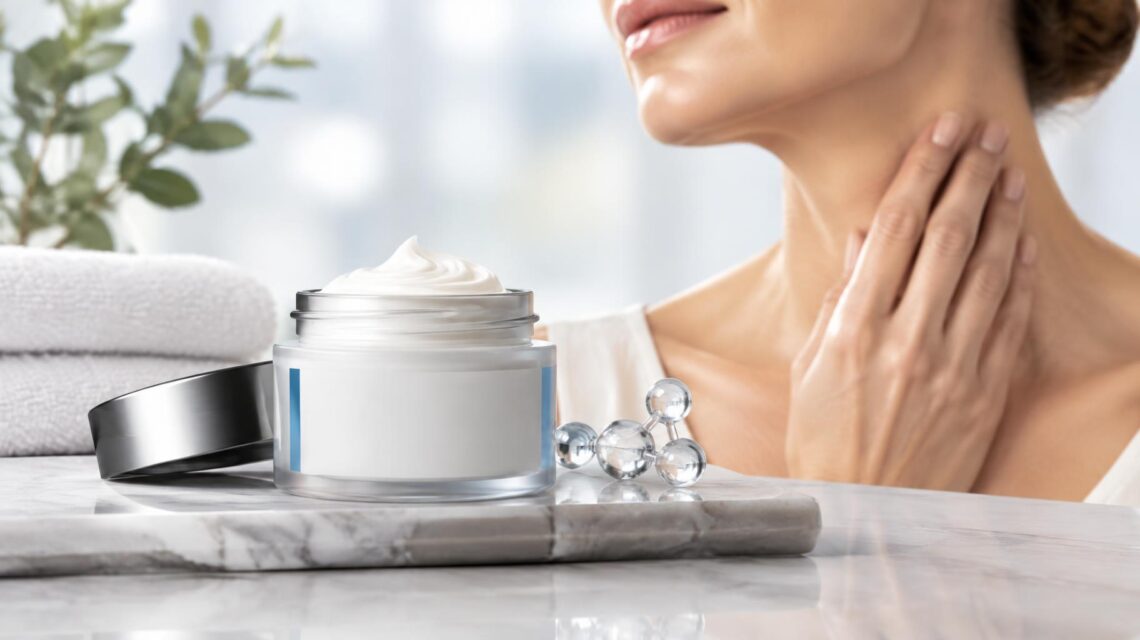
SkinCeuticals Tripeptide-R Neck Repair is a cosmetic treatment positioned around visible concerns such as neck crepiness, horizontal lines, and loss of firmness. Unlike a basic moisturizer marketed primarily for hydration, its identity centers on a peptide-led formula supported by retinol and a glaucine complex.
The supplied US listing places the price at $136 for a 50 ml bottle, also listed as 1.7 oz. That works out to approximately $2.72 per ml. Actual retail prices and promotions may change, so this is a price benchmark rather than a guarantee at checkout.
The central question is not simply whether the product contains recognizable skincare ingredients. It is whether the evidence behind the finished formula supports paying a premium.
The Formula: Three Numbers That Matter
2.5% Tripeptide Concentrate
The headline ingredient is a 2.5% tripeptide concentrate featuring palmitoyl tripeptide-1. This makes the peptide component a defined part of the product story rather than an unspecified addition buried in the marketing.
However, the wording matters. A 2.5% tripeptide concentrate should not automatically be read as 2.5% pure palmitoyl tripeptide-1. A concentrate can contain more than the named peptide, and the supplied information does not establish that the entire percentage represents pure peptide.
That distinction is important when comparing peptide skincare products. Percentages are most useful when the ingredient form and measurement basis are comparable.
0.2% Slow-Release Pure Retinol
The formula also contains 0.2% slow-release pure retinol. This makes Tripeptide-R Neck Repair a peptide-and-retinol product, not a peptide-only neck cream.
For shoppers comparing formulas, that is a meaningful distinction. Someone seeking a retinol-free product would need to look elsewhere. Equally, the phrase slow-release should not be interpreted as proof that the formula will be comfortable for every user.
The supplied references do not provide enough information to calculate an individual irritation risk or guarantee tolerability. This article evaluates the product evidence rather than providing an application schedule or personalized skincare advice.
5% Glaucine Complex
The third highlighted component is a 5% glaucine complex. As with the peptide concentrate, the stated percentage applies to a complex; it should not be presented as 5% pure glaucine.
These three ingredients help explain the formula’s positioning, but ingredient concentrations alone do not establish how much visible change a buyer will experience. For that, the finished-product study is more relevant.
The Clinical Numbers Behind the Price
SkinCeuticals reports results from a 16-week study involving 50 women aged 40–60. The reported changes were:
- 27% improvement in the appearance of crepiness.
- 16% improvement in horizontal neck lines.
- 16% improvement in firmness.
These are cosmetic appearance findings, not evidence of a medical treatment effect. They also describe reported study outcomes rather than a guaranteed result for an individual buyer.
Of the three figures, the crepiness result is the largest. Horizontal lines and firmness showed smaller reported changes. That gives readers a more useful picture than a broad claim that the product simply transforms the neck.
What Does a 27% Improvement Actually Mean?
A percentage improvement depends on the assessment method used. It does not necessarily mean that 27% of wrinkles disappeared, that every participant improved by the same amount, or that an observer would describe the difference in those terms.
The supplied study summary does not establish the exact scoring scales, the distribution of results, or how noticeable each change was to participants. The most accurate interpretation is therefore narrow: the brand reported improvement in the assessed appearance measures over 16 weeks.
What the Study Cannot Tell Us
The available summary does not establish whether the trial used a placebo, a basic moisturizer comparison, or blinded assessment. It also does not provide enough detail to judge statistical significance or determine which ingredient contributed most.
Because the participants were women aged 40–60, the findings should not automatically be generalized to every age group or population. Nor does a 16-week result establish how long any visible changes might persist after use ends.
These limitations do not make the results meaningless. They do mean that brand-reported clinical testing is not the same as independent proof of superiority over less expensive alternatives.
What Customer Reviews Add
The supplied review snapshots, checked on 19 October 2026, show approximately:
- 4.2 out of 5 from 138 reviews on Dermstore.
- 4.5 out of 5 from 60 reviews on the SkinCeuticals UK website.
Both averages lean positive, but they should remain separate rather than being combined into a single score. Different platforms can attract different customers and use different review collection processes.
Customer ratings offer a broader satisfaction signal than a clinical summary alone. However, the supplied information does not include a detailed breakdown of review themes, verified-purchase status, or incentives. It would therefore be speculative to claim that reviewers consistently praised a particular benefit or reported a particular problem.
Reviews are best treated as supporting context—not as controlled evidence that the formula produces the reported clinical changes.
Is Tripeptide-R Neck Repair Worth $136?
The case for the price rests on three points: a clearly described active-ingredient combination, a finished-product study with quantified cosmetic findings, and generally positive review averages.
The case against an automatic recommendation is equally straightforward. The study summary leaves important methodological questions unanswered, and the supplied sources do not establish that this product outperforms a cheaper neck treatment or moisturizer.
Where the Premium Has a Clear Rationale
For someone specifically comparing peptide-led neck products that also contain retinol, Tripeptide-R Neck Repair offers concrete information to evaluate. Its concentrations and reported study outcomes make the purchase easier to assess than a formula supported only by vague firming language.
Where Expectations Need Restraint
The evidence does not support treating the product as a substitute for a procedure, expecting horizontal lines to disappear, or assuming everyone will reproduce the study figures. The supplied information also does not establish how long one bottle lasts, so a reliable monthly cost cannot be calculated.
The Bottom Line
SkinCeuticals Tripeptide-R Neck Repair has a substantive evidence story, but not an unlimited one. Its peptide concentrate, slow-release retinol, and glaucine complex are supported by brand-reported improvements in three visible neck-aging measures over 16 weeks.
At $136, the most defensible description is a premium cosmetic treatment with quantified brand data—not a guaranteed neck transformation. Whether that evidence justifies the price depends on how much value a shopper places on this particular formula and its documented, but limited, testing.