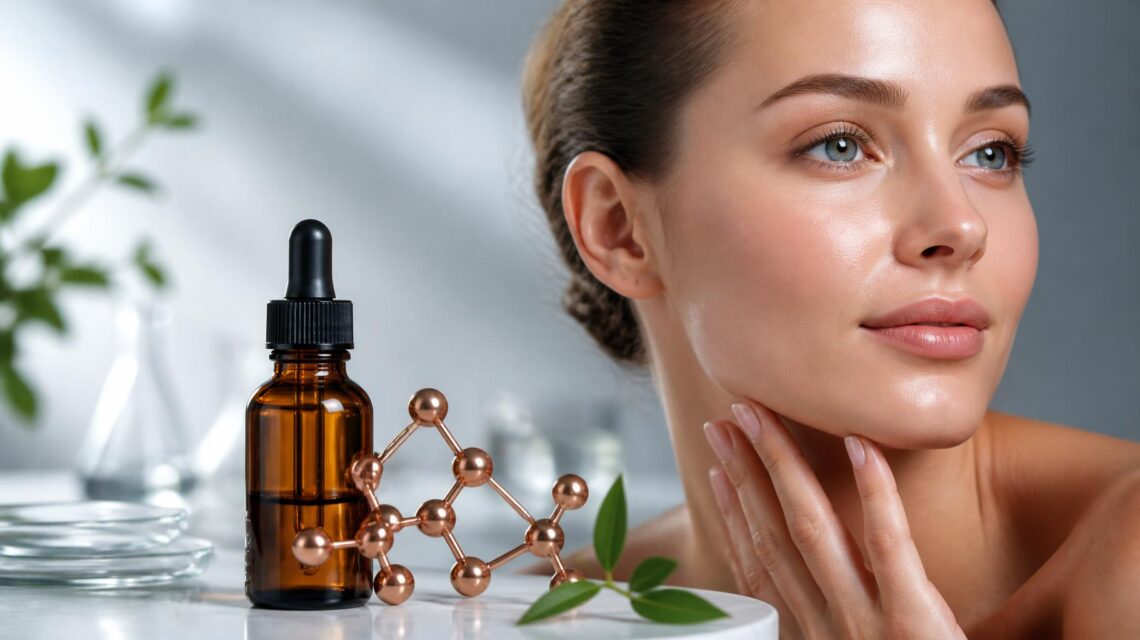
GHK copper peptides have become a popular ingredient in modern skincare, particularly among people looking to improve the appearance of fine lines, uneven texture, dullness and visible signs of environmental stress. Often listed on product labels as copper tripeptide-1, this naturally occurring peptide is associated with skin-supporting processes that may help promote a smoother, firmer and healthier-looking complexion.
Although copper peptides are not a substitute for sunscreen, prescription treatments or professional dermatological care, they can be a useful addition to a well-rounded skincare routine. Understanding how they work, what the research suggests and how to use them safely can help you decide whether this ingredient is right for your skin.
What Are GHK Copper Peptides?
GHK stands for glycine-histidine-lysine, a naturally occurring three-amino-acid peptide found in the body. When GHK binds with copper, it forms a copper peptide complex commonly known as GHK-Cu or copper tripeptide-1.
Peptides are short chains of amino acids that can interact with skin cells and support various biological functions. In skincare, they are often used in formulas designed to improve the appearance of ageing skin, support the skin barrier and enhance overall skin smoothness.
Levels of naturally occurring GHK may decline with age. For this reason, GHK copper peptides have attracted interest as a cosmetic ingredient that may help support some of the processes involved in maintaining healthy-looking skin. However, topical skincare products are not designed to replace the body’s natural systems, and results can vary significantly from person to person.
How Copper Peptides May Support Healthier-Looking Skin
GHK copper peptides are used in skincare because of their potential to support several aspects of skin appearance. Their benefits are generally associated with long-term, consistent use rather than instant results.
May Support the Look of Firmer Skin
Skin firmness is influenced by structural proteins such as collagen and elastin. As people age, the production and organisation of these proteins can change, contributing to fine lines, loss of elasticity and a less resilient appearance.
Research into GHK-Cu has explored its role in processes related to collagen and connective tissue. While topical formulations may help support a firmer-looking complexion for some users, they should not be viewed as a guaranteed collagen replacement or a non-surgical facelift. Visible improvement, when it occurs, is usually gradual.
May Improve the Appearance of Fine Lines
Fine lines are affected by age, sun exposure, facial movement, dryness and reduced skin elasticity. By supporting a smoother surface and helping the skin retain a more supple appearance, copper peptide products may make fine lines look less noticeable over time.
The results are likely to be more subtle than those associated with medical procedures. Using a copper peptide serum alongside daily moisturiser and broad-spectrum sunscreen may offer a more comprehensive approach to maintaining a youthful-looking complexion.
May Help Improve Skin Texture
Uneven skin texture can be caused by dryness, accumulated dead skin cells, previous blemishes and environmental damage. A well-formulated GHK copper peptide product may help skin appear smoother and more refined when used consistently.
It is important to remember that copper peptides are not exfoliants. They do not remove dead skin in the same way as alpha hydroxy acids, beta hydroxy acids or retinoids. Instead, they are generally used as supportive ingredients within a broader skincare routine.
May Support the Skin Barrier
A healthy skin barrier helps reduce moisture loss and protects the skin from external irritants. When the barrier is compromised, the complexion may feel tight, dry, rough or more reactive than usual.
Some copper peptide formulas are combined with hydrating and barrier-supporting ingredients such as hyaluronic acid, glycerine, ceramides, panthenol or squalane. These combinations can help create a moisturising routine that leaves skin feeling softer and more comfortable.
Potential Benefits of GHK Copper Peptides
People commonly choose copper peptide skincare products for the following cosmetic benefits:
- A smoother-looking skin surface
- Improved appearance of fine lines
- A firmer and more elastic-looking complexion
- Support for skin that appears tired or dull
- A more hydrated and comfortable skin feel
- Support for a healthy-looking skin barrier
- Improved overall skin resilience and texture
These potential benefits depend on the product’s concentration, stability, delivery system and supporting ingredients. The condition of the skin, age, lifestyle and consistency of use also influence outcomes.
How to Use a Copper Peptide Serum
Most GHK copper peptide products are applied after cleansing and before moisturising. Always follow the instructions supplied by the manufacturer, as formulations differ.
Simple Application Routine
- Cleanse the face with a gentle, non-stripping cleanser.
- Pat the skin dry, or leave it slightly damp if the product directions allow.
- Apply a small amount of copper peptide serum to the face and neck.
- Follow with a moisturiser suited to your skin type.
- Apply broad-spectrum sunscreen during the day.
Beginners may prefer to apply the product every other day before gradually increasing use. This approach can help identify whether the formula is suitable, especially if the skin is sensitive or prone to irritation.
Using too much product will not necessarily produce faster results. A small amount spread evenly across the skin is usually sufficient. Consistency is generally more valuable than applying a large quantity irregularly.
Can Copper Peptides Be Used With Other Skincare Ingredients?
GHK copper peptides may work well with gentle hydrating ingredients, antioxidants and moisturisers. However, some skincare enthusiasts prefer to avoid applying copper peptides in the same routine as highly active ingredients, particularly when the formula is new or the skin is sensitive.
Ingredients that may require careful planning include strong exfoliating acids, retinoids, benzoyl peroxide and high-strength vitamin C products, especially pure L-ascorbic acid. There is ongoing discussion about ingredient compatibility and stability, and recommendations may differ between brands.
To simplify your routine, consider separating products between morning and evening. For example, a copper peptide serum could be used at night, while vitamin C or an exfoliating product is used in the morning. If you already use several active ingredients, introduce only one new product at a time.
Are GHK Copper Peptides Safe?
Topical copper peptide products are generally considered suitable for many adults when used according to the label. Nevertheless, irritation, redness, dryness, itching or breakouts can occur, particularly with fragranced or highly concentrated formulas.
Before applying a new product to the entire face, perform a patch test. Apply a small amount to an inconspicuous area, such as the inner forearm or behind the ear, and monitor the area for 24 to 48 hours. A patch test cannot guarantee that irritation will not occur on the face, but it may help identify obvious sensitivity.
People with eczema, rosacea, a damaged skin barrier or known allergies should speak with a healthcare professional or dermatologist before introducing a new active skincare product. Stop using the product if significant burning, swelling, persistent redness or a rash develops.
Topical Copper Peptides Versus Injectable Products
Topical GHK copper peptide skincare products are applied to the surface of the skin and are intended for cosmetic use. Injectable copper peptide products are different and may carry medical risks, including infection, allergic reactions and complications related to unregulated or incorrect administration.
Products marketed for injection should not be used without qualified medical supervision. Consumers should also be cautious of online products that make dramatic claims about reversing ageing, repairing every type of tissue damage or producing rapid transformations. Reliable skincare information should be based on realistic expectations and appropriate safety guidance.
How Long Do Copper Peptides Take to Work?
Skincare results are rarely immediate. Some people may notice improved hydration or softness within a few weeks, particularly when the formula also contains moisturising ingredients. Changes in the appearance of fine lines, firmness and texture may take several weeks or months of regular use.
Take photographs under similar lighting if you want to assess progress. Avoid changing several products at once, as this makes it difficult to determine which ingredient is responsible for any improvement or irritation.
How to Choose a GHK Copper Peptide Product
When shopping for copper peptide skincare, look for a product from a reputable brand with clear ingredient labelling and sensible usage instructions. The ingredient may appear as copper tripeptide-1, GHK-Cu or copper peptide.
Consider choosing a formula that also includes supportive ingredients such as:
- Hyaluronic acid or glycerine for hydration
- Ceramides for barrier support
- Panthenol for a soothing skin feel
- Antioxidants for protection against environmental stress
- Peptides that complement the overall formula
Packaging also matters. Airless pumps, opaque containers and other protective designs may help limit exposure to light and air. Follow storage instructions and avoid using products that have changed colour, smell or texture unexpectedly.
The Bottom Line on GHK Copper Peptides
GHK copper peptides may support healthier-looking skin by helping improve the appearance of firmness, smoothness, fine lines and overall texture. They are best considered a gradual, supportive addition to a consistent skincare routine rather than a miracle anti-ageing treatment.
For the most effective approach, combine copper peptides with daily sunscreen, gentle cleansing, regular moisturising and other products selected for your skin’s needs. Introduce the ingredient slowly, monitor your skin’s response and seek professional advice if you have a dermatological condition or experience persistent irritation.