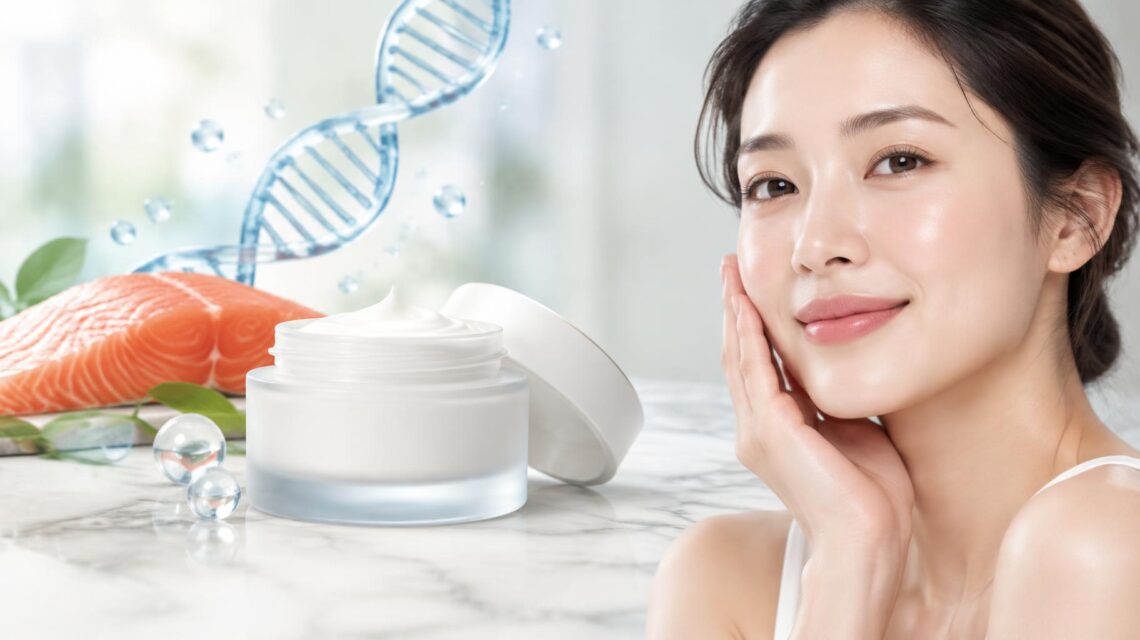
Dr.Reju-All Advanced PDRN Rejuvenating Cream sits within the growing category of Korean skincare products featuring DNA-derived ingredients. Its standout ingredient is PDRN, a term often discussed alongside peptides, collagen and other ingredients associated with rejuvenating skincare. But there is an important distinction: PDRN is a DNA-derived material, not a peptide.
Understanding that difference helps put the product into perspective. It also makes it easier to separate its ingredient list from broader claims about PDRN research. Here is a closer look at what Dr.Reju-All Advanced PDRN Rejuvenating Cream contains, what the terminology means and how to read its marketing without confusing a cosmetic cream with a medical treatment.
What Is Dr.Reju-All Advanced PDRN Rejuvenating Cream?
Dr.Reju-All, also styled Dr.Rejuall, is a Korean skincare brand. Its Advanced PDRN Rejuvenating Cream is a topical cosmetic product supplied in a 20ml format. PDRN is the central ingredient in its positioning, accompanied by familiar skincare ingredients including niacinamide, panthenol and sodium hyaluronate.
The brand product page lists the cream at $29.90, while Skin Cupid lists the 20ml product at $28. Prices can change, and shipping or regional availability may affect the final purchase cost.
The word rejuvenating belongs to the product name. It should not be interpreted as proof that the cream reverses biological ageing, regenerates tissue or produces a medical outcome.
PDRN Is Salmon DNA, Not a Peptide
What does PDRN stand for?
PDRN stands for polydeoxyribonucleotide. It refers to DNA-derived chains made from nucleotide building blocks. In this product, the ingredient is identified as Sodium DNA and described as originating from wild salmon milt.
Although salmon DNA is a useful shorthand, the cream does not contain whole salmon cells as its featured ingredient. The relevant material is processed DNA-derived material. That distinction is more accurate than describing PDRN as either a salmon extract in general or a peptide.
How is a peptide different?
Peptides are chains of amino acids. DNA is built from nucleotides. These are different molecular building blocks, so the terms are not interchangeable.
- PDRN: DNA-derived material composed of nucleotide chains.
- Peptides: Molecules composed of amino acid chains.
- Hydrolyzed collagen: A separate protein-derived ingredient that should not be confused with PDRN.
Grouping all three under a broad rejuvenating skincare label does not make them chemically equivalent. A product description that calls PDRN a peptide is therefore misidentifying the featured ingredient.
Does Dr.Reju-All Advanced PDRN Rejuvenating Cream Contain Peptides?
The supplied product information does not identify a separate peptide active or peptide complex. Its PDRN ingredient is not a peptide. However, the formula also lists hydrolyzed collagen, which deserves a more nuanced explanation.
Hydrolyzed collagen is collagen broken into smaller protein-derived components, which can include peptide fragments. Consequently, an absolute claim that a hydrolyzed-collagen formula contains no peptides can be chemically misleading. The clearest description is that this is a PDRN-focused cream, not a product whose PDRN should be classified as a peptide active.
This distinction avoids replacing one marketing oversimplification with another. Ingredient categories should be described according to their chemistry rather than the skincare trend they happen to accompany.
A Closer Look at the Featured Ingredients
Sodium DNA: the PDRN ingredient
The product information describes the Sodium DNA ingredient as PDRN at 1,200ppm, sourced from wild salmon milt, with a stated purity of 99%.
Concentration and purity describe different things. The 1,200ppm figure concerns the stated amount in the formula, while the purity statement concerns the featured raw material. It does not mean that the finished cream is 99% PDRN. Neither figure, by itself, demonstrates how the finished product performs on human skin.
Niacinamide and panthenol
Niacinamide and panthenol are familiar ingredients in cosmetic formulations. Their inclusion places the cream within a broader skincare formula rather than making it a standalone PDRN preparation.
Still, recognising an ingredient name is not enough to predict a finished product result. Concentration, formulation and testing all matter. The presence of these ingredients should not be used to promise a particular change in skin appearance or comfort.
Adenosine, sodium hyaluronate and hydrolyzed collagen
The listed ingredients also include adenosine, sodium hyaluronate and hydrolyzed collagen. Sodium hyaluronate is a salt form of hyaluronic acid, while hydrolyzed collagen is a processed collagen-derived ingredient.
These ingredients have distinct identities. Adenosine is not PDRN, sodium hyaluronate is not collagen, and applying a collagen-derived cosmetic does not establish that it replaces collagen within the skin. Keeping those distinctions clear makes the ingredient list easier to interpret.
What Does the Evidence Establish?
The most important evidence question is not whether PDRN has attracted research interest. It is whether reliable testing supports a specific claim for this finished topical cream.
Research involving an ingredient does not automatically validate every product containing it. Differences in formulation, delivery route, concentration and study setting can change what conclusions are reasonable. Findings involving an injectable preparation, for example, cannot simply be transferred to a cosmetic applied to the skin.
Interpreting the post-laser recovery claim
The supplied product material includes a claim of more than 25% improvement in post-laser recovery. However, the supplied information does not provide a sample size or sufficient study detail to assess that claim confidently.
Important unanswered questions include what recovery meant, how it was measured, what comparison was used and whether the finished cream was tested. The percentage should therefore be treated as a marketing claim, not an established or guaranteed outcome.
Likewise, customer reviews can describe individual experiences but cannot establish clinical effectiveness. Review counts and positive testimonials are not substitutes for transparent, appropriately designed studies.
A Cosmetic Cream Is Not a Medical PDRN Treatment
Dr.Reju-All Advanced PDRN Rejuvenating Cream is presented as a topical skincare product. The supplied sources do not establish regulatory approval for this cream to treat disease, heal wounds or accelerate recovery after a procedure.
It would also be inaccurate to describe every PDRN preparation worldwide as sharing one approval status. Regulatory status depends on the particular product, intended use and country. This cream should not be represented as an approved medical treatment on the basis of research involving other PDRN products.
This overview is informational and does not establish whether the cream is suitable for use after laser treatment or another procedure.
What to Check Before Comparing PDRN Creams
When evaluating Dr.Reju-All against other PDRN skincare products, look beyond the headline ingredient:
- Ingredient identity: Check whether PDRN is accurately described as DNA-derived material.
- Source: This product identifies a salmon-derived ingredient, which may matter for personal preferences or ingredient sensitivities.
- Concentration language: Distinguish the stated formula concentration from raw-material purity.
- Evidence quality: Look for testing of the finished product rather than references to unrelated preparations.
- Value: Compare the 20ml size, current price and delivery costs.
The Bottom Line
Dr.Reju-All Advanced PDRN Rejuvenating Cream features salmon-derived PDRN, not a PDRN peptide. Its formula also includes niacinamide, panthenol, adenosine, sodium hyaluronate and hydrolyzed collagen.
The strongest way to assess it is to keep ingredient chemistry, cosmetic marketing and medical evidence separate. Its stated PDRN concentration and source describe the formula, but they do not establish a health outcome. Accurate terminology and realistic expectations offer a more useful foundation than rejuvenation claims alone.