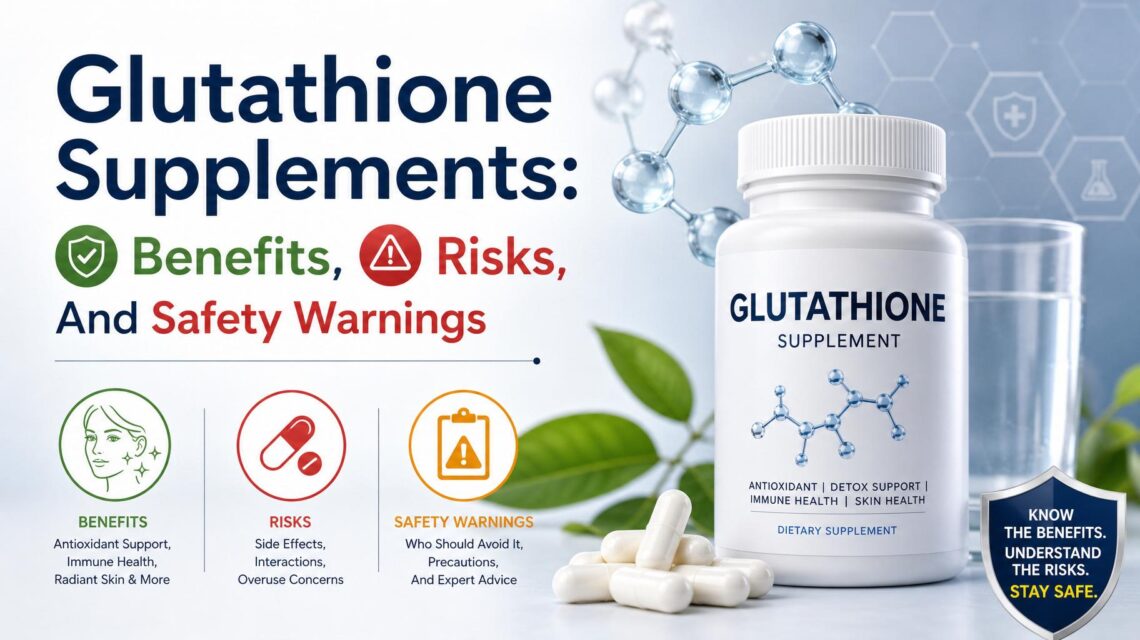
Glutathione has become one of the most talked-about supplements in the wellness world, often promoted for everything from skin health to immune support and detoxification. But while it is a naturally occurring antioxidant with important roles in the body, not every claim surrounding glutathione supplements is backed by strong evidence. If you are considering adding it to your routine, it is important to understand both the potential benefits and the possible risks.
This guide explains what glutathione is, how supplements work, their possible advantages, known side effects, and the most important safety warnings to keep in mind before using them.
What Is Glutathione?
Glutathione is a powerful antioxidant made naturally in the body. It is found in nearly every cell and is composed of three amino acids: glutamine, glycine, and cysteine. Its main job is to help protect cells against oxidative stress and damage caused by free radicals, toxins, and environmental exposures.
Your body uses glutathione in several critical processes, including:
- Neutralizing free radicals that can damage cells
- Supporting liver function and detoxification pathways
- Helping the immune system function properly
- Repairing and building tissues
- Regenerating other antioxidants, such as vitamins C and E
Because glutathione levels may decline with age, poor diet, chronic illness, stress, pollution exposure, and certain medications, many people turn to supplements in hopes of boosting their body’s defenses.
Why People Take Glutathione Supplements
Glutathione supplements are often marketed as a solution for a wide range of health goals. Some of the most common reasons people take them include support for cellular health, skin brightening, anti-aging, and improved recovery from stress and illness.
Common forms of glutathione supplementation include:
- Oral capsules or tablets
- Liposomal glutathione, designed for improved absorption
- Sublingual products taken under the tongue
- Intravenous infusions, usually provided in clinics
- Precursors such as N-acetylcysteine, which help the body produce more glutathione
Although interest in supplementation is growing, the effects can vary depending on the product, dosage, individual health status, and how well the supplement is absorbed.
Potential Benefits of Glutathione Supplements
1. Antioxidant Protection
One of the strongest reasons for glutathione’s popularity is its role as a master antioxidant. Antioxidants help protect the body from oxidative stress, which is linked to aging and a range of chronic health problems. In theory, maintaining healthy glutathione levels may support overall wellness by reducing cellular damage.
This does not mean that supplements are a cure-all, but they may be useful in specific situations where glutathione levels are low or oxidative stress is elevated.
2. Liver Support and Detoxification
Glutathione is heavily involved in the liver’s natural detoxification processes. It helps break down and remove harmful compounds, including some drugs, pollutants, and metabolic waste products. Because of this, glutathione is often included in liver support regimens.
Some people use it to support recovery from exposure to toxins or to promote general liver health, though supplementation should never replace medical treatment for liver disease.
3. Immune System Support
Healthy glutathione levels appear to be important for normal immune function. Since the immune system depends on balanced oxidative activity, glutathione may help support the body’s natural defense systems.
This is one reason some people explore glutathione supplementation during periods of high stress, frequent illness, or fatigue. However, stronger clinical evidence is still needed to confirm broad immune benefits in healthy individuals.
4. Skin Health and Brightening
One of the most heavily marketed uses of glutathione supplements is for skin brightening or creating a more even complexion. Some evidence suggests glutathione may influence melanin production, which has led to its popularity in beauty and cosmetic markets.
Still, results are inconsistent, and not all products are equally effective. Skin-related claims often outpace the science, so consumers should approach these promises with caution.
5. Support in Certain Medical Conditions
Researchers have studied glutathione in connection with several health conditions, including neurodegenerative disorders, metabolic issues, and diseases linked to oxidative stress. In some cases, glutathione or related compounds may have targeted benefits under medical supervision.
That said, these uses are highly specific and should not be confused with general over-the-counter wellness claims.
Do Glutathione Supplements Actually Work?
This is where things become more complicated. While glutathione is essential in the body, the effectiveness of taking it as a supplement is still being debated. One issue is bioavailability, or how much of the supplement actually gets absorbed and used by the body.
Traditional oral glutathione has been questioned because it may be broken down during digestion. Newer delivery forms, such as liposomal and sublingual products, are marketed as more absorbable, but quality and effectiveness vary between brands.
In some cases, healthcare professionals may recommend precursors like N-acetylcysteine instead, since they can help the body make its own glutathione more effectively.
The key takeaway is that glutathione supplementation may help in some situations, but it is not universally proven for all the benefits often advertised.
Possible Risks and Side Effects
Many people assume that because glutathione is naturally produced by the body, supplements must be completely safe. That is not always true. Like any supplement, glutathione can cause side effects and may not be appropriate for everyone.
Possible side effects include:
- Digestive discomfort, such as bloating or cramping
- Allergic reactions in sensitive individuals
- Skin rashes in rare cases
- Breathing issues, especially when inhaled forms are used by people with asthma
There are also concerns that long-term use of high doses may disrupt the body’s natural balance in ways that are not yet fully understood. Because long-term research is limited, caution is especially important with prolonged or high-dose use.
Important Safety Warnings
1. Not All Products Are High Quality
Supplement quality can vary widely. Some products may not contain the amount of glutathione listed on the label, while others may include unnecessary fillers or contaminants. Choosing a reputable brand that uses third-party testing is important.
2. Intravenous Use Carries Extra Risks
IV glutathione has gained popularity in some wellness clinics, especially for skin brightening and detox trends. However, intravenous supplements should only be administered by qualified medical professionals. Poor-quality administration, unsafe ingredients, or inappropriate dosing can create serious risks.
Consumers should be particularly cautious with unregulated clinics making dramatic promises.
3. It May Interact With Medical Conditions or Treatments
People with certain medical conditions should speak with a doctor before using glutathione supplements. This is especially important for those who:
- Have asthma or respiratory sensitivity
- Are pregnant or breastfeeding
- Have a chronic illness or liver condition
- Take prescription medications regularly
- Are undergoing chemotherapy or other complex treatments
Even natural supplements can affect treatment plans, so professional guidance matters.
4. Beauty Claims Can Be Misleading
Glutathione is often promoted online as a miracle skin-whitening or anti-aging agent. These claims can be exaggerated and, in some cases, irresponsible. Cosmetic benefits are not guaranteed, and users should be skeptical of products promising dramatic transformations in a short time.
Who Should Avoid Glutathione Supplements?
While some healthy adults may tolerate glutathione well, others should avoid it unless a healthcare provider recommends it. People who should be extra cautious include:
- Individuals with a history of allergies to supplements or additives
- Anyone with asthma, especially with inhaled products
- Pregnant or breastfeeding individuals