Social media has changed the way people think about beauty, self-checks, and even medical advice. One of the latest trends gaining attention involves people closely examining moles, freckles, and skin marks on camera, often using filters, viral checklists, or amateur opinions to decide whether something looks dangerous. While increased awareness around skin health can be positive, medical experts are warning that this trend may also create confusion, anxiety, and delayed treatment when people rely on online content instead of professional evaluation.
The growing popularity of mole-focused videos and skin-check posts has sparked concern among doctors who say that skin cancer is too serious to be judged by social media trends alone. A changing mole can sometimes be harmless, but it can also be an early warning sign of melanoma or another form of skin cancer. The key issue is that appearances online can be misleading, and not every suspicious-looking mark is cancerous, just as not every dangerous lesion looks dramatic at first glance.
Why the Social Media Mole Trend Is Raising Alarm
Health content on social platforms often spreads quickly because it feels personal and accessible. Someone posts a before-and-after photo of a mole removal, another shares a checklist of warning signs, and others begin comparing their own skin to what they see on screen. On the surface, this can seem helpful. It encourages people to notice changes in their body and talk more openly about health concerns.
However, doctors warn that social media is not a substitute for a proper skin examination. Lighting, camera angles, beauty filters, and image quality can dramatically change how a mole looks. In many cases, users may self-diagnose incorrectly or dismiss a lesion because it does not resemble the ones highlighted in viral posts.
The biggest concern is not awareness itself, but false confidence. People may assume they can safely monitor a mole at home based on online advice, when in reality a trained dermatologist may identify subtle but important signs that are easy to miss.
How Online Trends Can Mislead Viewers
- Filters and editing can alter color, texture, and contrast
- One-size-fits-all advice does not apply to every skin type or lesion
- Fear-based content can create unnecessary panic over harmless marks
- Reassuring content may cause people to ignore real warning signs
- Non-experts often present opinions as facts
Because of this, doctors are encouraging the public to treat social media as a prompt for professional care, not as the final word.
Understanding the Link Between Moles and Skin Cancer
Moles are common and most are harmless. They can appear anywhere on the body and may be flat or raised, smooth or rough, light or dark. Many people develop new moles over time, especially during childhood and early adulthood. But any mole that changes in shape, size, texture, or color deserves closer attention.
Skin cancer develops when skin cells grow abnormally, often due to UV damage from the sun or tanning beds. Melanoma is the most serious form because it can spread to other parts of the body if it is not caught early. There are also other common skin cancers, including basal cell carcinoma and squamous cell carcinoma, which may appear differently from typical moles.
Early detection is one of the most important factors in successful treatment. That is why doctors emphasize routine skin awareness, paired with professional exams when something new or unusual appears.
The ABCDE Rule for Checking Moles
Dermatologists often use the ABCDE guide to help identify suspicious moles. While this is not a diagnosis tool on its own, it is a useful starting point:
- A for Asymmetry: one half does not match the other
- B for Border: edges are irregular, blurred, or poorly defined
- C for Color: multiple shades or uneven coloring appear in the same spot
- D for Diameter: larger than about 6mm, though smaller lesions can also be dangerous
- E for Evolving: changes in size, shape, color, or symptoms over time
Among these signs, evolving may be the most significant. A mole that starts itching, bleeding, crusting, or rapidly changing should never be ignored.
Why Professional Skin Checks Matter
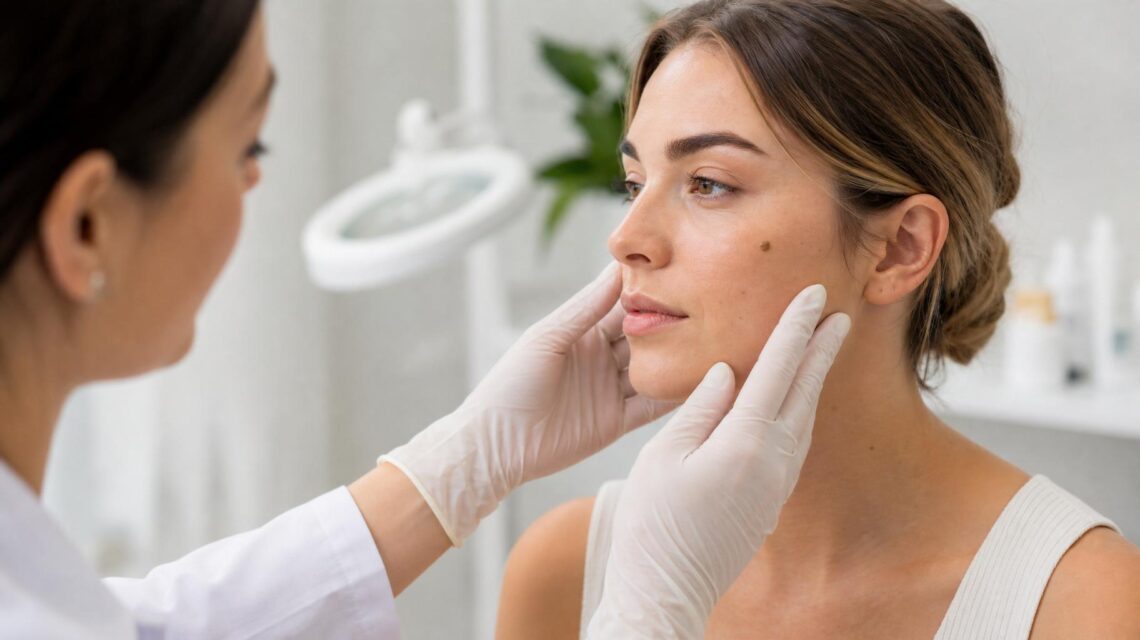
Even when people know the warning signs, it can still be difficult to judge a mole accurately. Dermatologists do far more than look with the naked eye. They may use dermoscopy, evaluate skin patterns, compare lesions across the body, and consider personal risk factors such as family history, previous sunburns, immune status, and skin type.
A suspicious mole may require monitoring, photography, biopsy, or removal depending on what the doctor sees. Importantly, many early skin cancers are subtle. They may not match the dramatic examples seen online, which is one reason self-assessment through social media can be risky.
A doctor can also identify non-cancerous conditions that people often mistake for dangerous moles, including seborrheic keratoses, angiomas, age spots, and harmless pigmentation changes. Getting a professional opinion can reduce both unnecessary fear and harmful delay.
When You Should Book an Appointment
- A mole has changed recently
- You notice a new dark spot that looks different from others
- A lesion bleeds, scabs, or does not heal
- A mole becomes itchy, tender, or painful
- You have many moles and find it hard to track changes
- You have a personal or family history of skin cancer
- You have had heavy sun exposure or used tanning beds
If you are unsure, it is always safer to have the spot examined than to wait for reassurance from online comments or trending videos.
The Psychological Effect of Viral Health Trends
The social media mole trend also reflects a broader issue in digital health culture: people are increasingly turning to short-form content for medical guidance. This can create two very different reactions. Some viewers become overly anxious and begin to see every freckle as a threat. Others become desensitized and assume that as long as their mole does not look exactly like a cancer image online, there is nothing to worry about.
Neither response is ideal. Health information without context can quickly become misleading, especially when creators prioritize engagement over accuracy. A dramatic thumbnail, a shocking caption, or a confident but unsupported claim can spread faster than evidence-based advice from trained professionals.
The best use of online health content is as a reminder to pay attention to your body, not as a replacement for diagnosis. Responsible awareness means using credible sources and seeking medical review when needed.
How to Protect Your Skin Every Day
While mole checks are important, prevention remains a major part of reducing skin cancer risk. Much of the damage linked to skin cancer comes from ultraviolet exposure over time. Daily skin protection is one of the simplest ways to support long-term health.
Smart Skin Protection Habits
- Use a broad-spectrum sunscreen with SPF 30 or higher
- Reapply sunscreen regularly, especially after swimming or sweating
- Wear hats, sunglasses, and protective clothing outdoors
- Seek shade during peak sun hours
- Avoid tanning beds completely
- Check your skin monthly in good lighting
- Take note of spots that look different from the rest
These habits are useful for everyone, not just people with fair skin or a family history of skin cancer. Skin cancer can affect people of all skin tones, and delayed diagnosis can be especially common when warning signs are overlooked.
What to Do Instead of Following Viral Skin Advice
If you come across a social media post about suspicious moles, use it as a prompt to take a balanced approach. Examine your own skin carefully, but resist the urge to diagnose yourself based on comparisons. Save images only for your own tracking if needed, and arrange a medical appointment if a spot concerns you.
It is also wise to follow credible sources for health information, such as dermatology organizations, cancer charities, public health bodies, and licensed medical professionals who provide evidence-based education.
Awareness is helpful. Self-diagnosis is not enough. The difference can have real consequences when it comes to conditions like melanoma, where early action matters.
Final Thoughts
The rise of mole-related content on social media shows that people want to be proactive about their health, which is a positive shift. But doctors are right to raise concerns when online trends blur the line between awareness and diagnosis. A mole that appears harmless on a phone screen could still need medical attention, while a frightening-looking lesion might turn out to be benign.
The most effective response is a sensible one: learn the warning