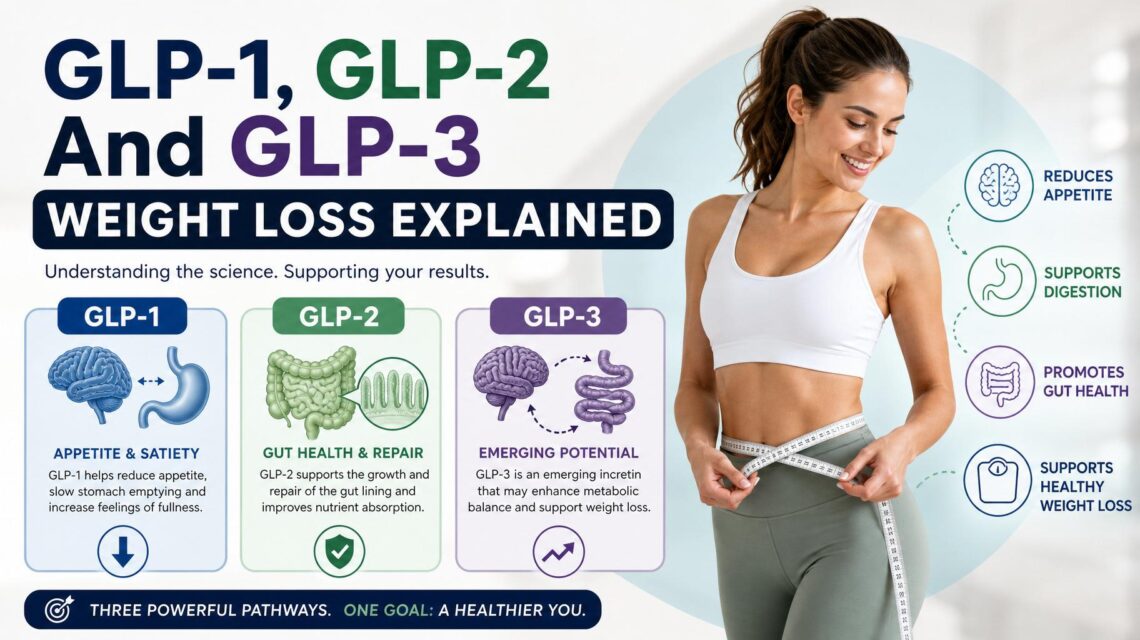
Weight-loss medicine is evolving fast, and one of the biggest reasons is the growing interest in GLP-based therapies. Many people have already heard of GLP-1 because of blockbuster medications used for obesity and type 2 diabetes. But now, attention is expanding to include GLP-2 and so-called GLP-3 approaches, creating both excitement and confusion.
If you are trying to understand what these terms mean, how they differ, and whether they matter for weight loss, this guide breaks it down in simple language. While GLP-1 has become the most established player in this space, newer gut-hormone combinations and next-generation therapies are changing the conversation around metabolic health.
What Does GLP Mean in Weight Loss?
GLP stands for glucagon-like peptide, a group of hormones involved in digestion, blood sugar regulation, and appetite signaling. These hormones are naturally produced in the body, especially in the gut, and they help coordinate how we respond to food.
In the weight-loss world, GLP hormones matter because they can influence:
- Hunger levels
- How quickly the stomach empties
- Blood sugar control
- Feelings of fullness after eating
- Energy balance and metabolism
Drug developers have focused on these pathways because obesity is not just about willpower. It is deeply tied to hormones, brain signaling, insulin response, and how the body regulates energy intake. That is why GLP-targeting medications have become such an important part of modern obesity treatment.
GLP-1 Weight Loss Explained
GLP-1, or glucagon-like peptide-1, is the best-known hormone in this category. It is released in the gut after eating and helps regulate blood sugar while also reducing appetite. This dual effect is one reason GLP-1-based medications have been so successful.
How GLP-1 Works
GLP-1 medications mimic the natural hormone and help the body in several ways:
- They increase insulin release when blood sugar rises
- They slow stomach emptying, helping people feel full longer
- They reduce appetite signals in the brain
- They may help decrease cravings and overall calorie intake
For people with obesity or type 2 diabetes, these effects can lead to meaningful and sustained weight loss when combined with healthy lifestyle changes.
Why GLP-1 Drugs Became So Popular
The popularity of GLP-1 medications comes from the fact that they produced far stronger weight-loss results than older anti-obesity drugs. Instead of modest changes, many patients experienced clinically significant reductions in body weight.
Commonly discussed GLP-1-based medications include treatments containing semaglutide and liraglutide. These have become widely recognized because they not only support weight reduction but also improve important health markers such as blood sugar and, in some cases, cardiovascular risk.
That said, GLP-1 drugs are not magic. They can cause side effects, and they are not suitable for everyone. Nausea, vomiting, constipation, diarrhea, and other digestive issues are among the most frequently reported concerns.
What Is GLP-2?
GLP-2, or glucagon-like peptide-2, is another gut hormone, but it has a very different primary role from GLP-1. Rather than being mainly known for appetite control, GLP-2 is more closely linked to intestinal growth, gut lining health, and nutrient absorption.
This means GLP-2 is not typically discussed as a straightforward weight-loss hormone in the same way GLP-1 is. In fact, because GLP-2 may support intestinal function and absorption, its role in body weight is more complex.
GLP-2 and Metabolic Health
Researchers are interested in GLP-2 because gut health has a major effect on overall metabolism. A healthier intestinal barrier and better digestive function may influence inflammation, nutrient handling, and long-term metabolic balance.
Potential areas of interest for GLP-2 research include:
- Supporting gut integrity
- Improving nutrient absorption in certain medical conditions
- Influencing inflammation and digestive health
- Possibly contributing to broader combination therapies
However, it is important to understand that GLP-2 is not currently the headline weight-loss tool that GLP-1 is. Instead, it is part of the broader scientific conversation about how the gut and hormones interact to shape body weight and health outcomes.
What Is GLP-3?
The term GLP-3 can be confusing because it is not as widely established in the same way as GLP-1 or GLP-2. In many discussions about next-generation obesity medication, people use terms like GLP-3 informally to describe newer multi-action hormone therapies or future drugs that go beyond single-hormone targeting.
Rather than referring to one universally recognized hormone therapy already dominating the market, GLP-3 is often discussed as part of the next wave of treatment innovation. This can include medications designed to target more than one receptor involved in appetite and metabolic control.
The Rise of Multi-Target Weight-Loss Drugs
After the success of GLP-1 medications, pharmaceutical companies began developing therapies that combine multiple hormonal effects. The idea is simple: if one hormone pathway can improve appetite and blood sugar, then combining pathways may create even greater benefits.
These newer medications may target combinations such as:
- GLP-1 plus GIP
- GLP-1 plus glucagon-related pathways
- Triple-agonist approaches affecting several metabolic receptors at once
This is likely where much of the GLP-3 conversation comes from. It reflects a broader shift toward more advanced metabolic therapies that may produce stronger weight loss, better blood sugar control, or improved body composition compared with first-generation drugs.
GLP-1 vs GLP-2 vs GLP-3: Key Differences
It helps to think of these options as belonging to the same broad family but serving different purposes.
- GLP-1: Primarily focused on appetite reduction, blood sugar control, and clinically proven weight loss
- GLP-2: More closely associated with intestinal health, gut function, and nutrient absorption
- GLP-3: Often used to describe emerging or next-generation hormone-based therapies, especially multi-target obesity drugs
So while GLP-1 is already a major force in obesity care, GLP-2 is more specialized, and GLP-3 represents the future-facing side of the conversation.
Why These Hormones Matter for the Future of Weight Loss
The obesity treatment landscape is moving beyond the idea that weight management is simply about eating less and moving more. Science now shows that the body uses a complicated network of gut hormones, brain signals, insulin pathways, and digestive mechanisms to regulate hunger and fullness.
This matters because it changes how clinicians and patients think about treatment. Hormone-based therapies can help address underlying biology, especially for people who have struggled with repeated weight regain despite serious lifestyle efforts.
Future drug development is likely to focus on:
- Greater weight-loss effectiveness
- Fewer side effects
- Improved muscle and fat balance
- Better long-term metabolic protection
- More personalized treatment strategies
That is why understanding GLP-1, GLP-2, and GLP-3 matters. These are not just buzzwords. They represent different parts of a larger movement toward more precise and biologically informed obesity care.
Are GLP-Based Weight-Loss Treatments Right for Everyone?
Although enthusiasm is high, these treatments are not one-size-fits-all. People considering GLP-based medications should speak with a qualified healthcare professional to review risks, benefits, cost, and medical suitability.
Important factors include:
- Personal and family medical history
- Existing digestive issues
- Type 2 diabetes or predi