The beauty industry is entering a new phase, and it is being shaped by a more holistic understanding of skin, wellness, and long-term results. Instead of relying only on creams, serums, and masks applied to the surface, brands and experts are increasingly exploring how beauty can be supported from within. At the center of this shift is the growing popularity of peptides and the concept of inside-out beauty, a movement that connects nutrition, supplementation, skincare science, and healthy aging.
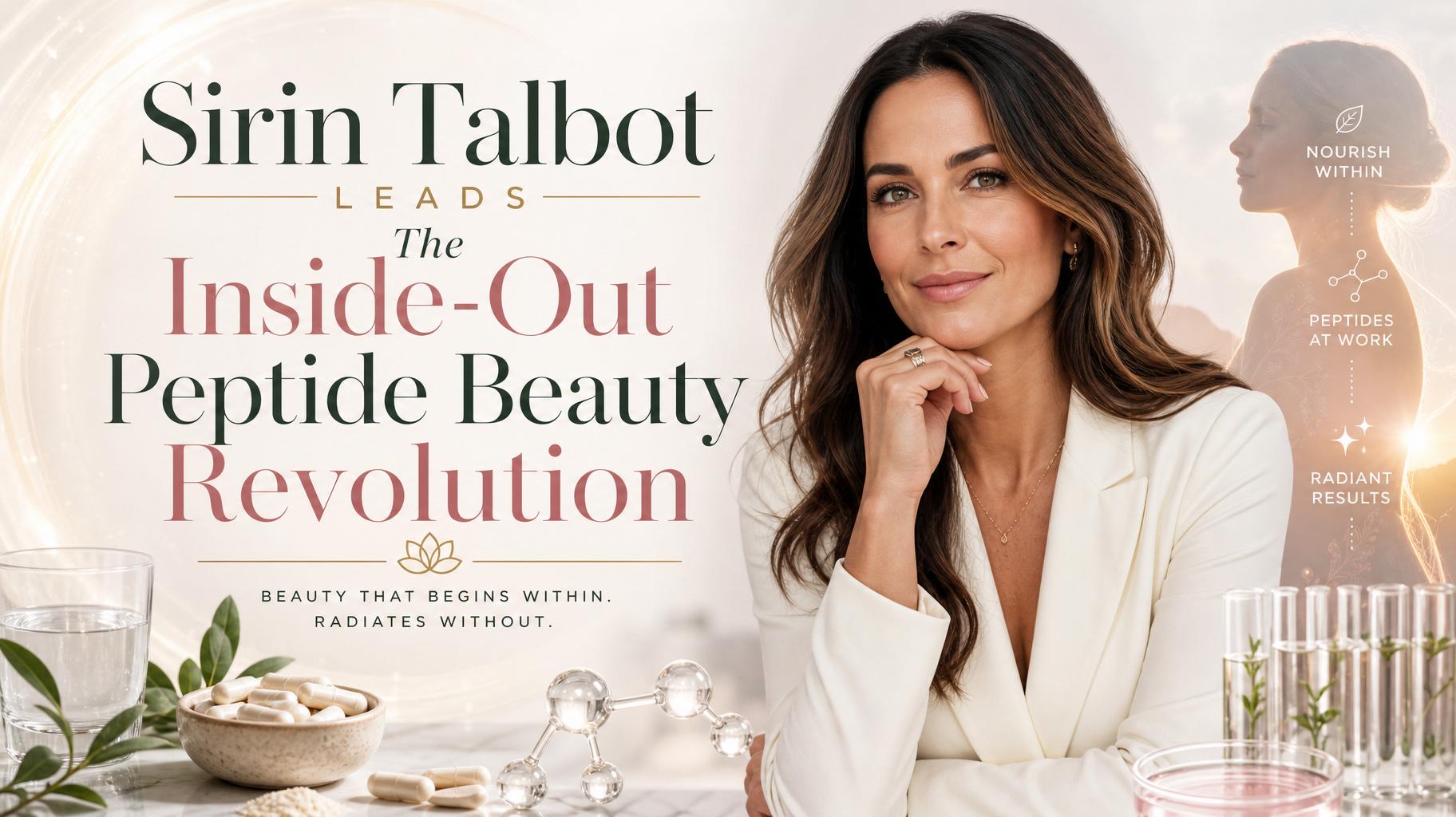
Sirin Talbot has emerged as a leading voice in this space, helping bring the inside-out peptide beauty revolution into the mainstream. Her work reflects a larger industry transformation, one where consumers no longer want quick fixes alone. They are looking for solutions backed by science, designed to support the skin at a deeper level, and aligned with overall wellness.
What Inside-Out Beauty Really Means
Inside-out beauty is the idea that skin health and appearance are closely linked to what happens within the body. While topical skincare remains important, it is only one part of the picture. Hydration, inflammation, collagen production, nutrient intake, stress, sleep quality, and gut balance all influence how skin looks and feels.
This approach recognizes that glowing skin is not simply created by external products. It is supported by internal processes that affect elasticity, firmness, moisture retention, and resilience. That is why supplements, especially peptide-based formulations, are gaining traction among consumers who want a more complete beauty routine.
Rather than replacing traditional skincare, inside-out beauty works alongside it. The goal is to create a routine that supports both the external barrier of the skin and the internal systems that contribute to a healthy complexion.
Why Peptides Are Driving the Beauty Conversation
Peptides have become one of the most talked-about ingredients in modern beauty and wellness. These short chains of amino acids serve as building blocks for proteins such as collagen, elastin, and keratin, all of which are essential for the structure and strength of the skin, hair, and nails.
As the body ages, natural collagen production begins to decline. This contributes to visible signs of aging, including fine lines, reduced elasticity, dryness, and thinning skin. Peptides are increasingly being studied and used because of their potential to support the body’s natural regenerative processes.
In an inside-out beauty context, peptide supplementation is especially appealing because it addresses beauty at a foundational level. Instead of only coating the skin’s surface, peptides may help nourish the skin from within by supporting the proteins responsible for firmness and smoothness.
The Appeal of Peptide-Based Beauty Solutions
- Support for collagen production: Peptides are closely associated with the structural proteins that keep skin looking firm and youthful.
- Holistic beauty benefits: They may support not only skin health but also hair and nail appearance.
- Science-forward positioning: Consumers increasingly prefer ingredients that feel credible and research-driven.
- Alignment with wellness trends: Peptides fit naturally into broader routines focused on longevity, recovery, and healthy aging.
Sirin Talbot’s Role in the Peptide Beauty Movement
Sirin Talbot’s leadership in this space reflects the changing demands of beauty consumers. Today’s audience is informed, ingredient-conscious, and eager to understand how products work. Talbot’s contribution to the inside-out peptide beauty revolution appears to be rooted in connecting innovation, consumer education, and a wellness-oriented view of beauty.
What makes this movement so powerful is that it is not just about selling a product category. It is about reshaping how people think about self-care. Beauty is no longer framed as purely cosmetic. It is becoming more integrated with nutrition, internal balance, and proactive aging support.
Talbot’s influence stands out because the peptide category can be complex. Many consumers understand concepts like collagen and hydration, but they may not fully know how peptides fit into the picture. Leaders in this field help make the science more accessible while also reinforcing that beauty routines can be both luxurious and functional.
The Shift From Reactive Skincare to Proactive Beauty
For years, many beauty routines were built around reacting to visible concerns after they appeared. Fine lines, dullness, dehydration, and uneven texture were treated once they became obvious. The inside-out beauty movement supports a more proactive approach.
By focusing on internal nourishment and ongoing support, peptide beauty solutions are appealing to consumers who want to maintain skin quality over time. This does not mean chasing perfection. Instead, it means investing in skin health before concerns become more pronounced.
This shift is especially important as consumers become more educated about aging. There is a growing understanding that aging is a natural process, but one that can be supported through smart lifestyle choices, targeted skincare, and nutritional strategies.
How Proactive Beauty Is Changing Consumer Habits
- People are adding ingestible beauty products to their routines earlier, not just after signs of aging become advanced.
- Consumers are combining supplements with high-performance topical skincare.
- There is more interest in beauty products that support long-term wellness goals.
- Shoppers are reading labels carefully and looking for ingredient transparency.
The Connection Between Wellness and Beauty
One of the main reasons the inside-out peptide beauty trend is growing so quickly is that it matches the larger wellness economy. Consumers increasingly see beauty as an extension of health. They are paying attention to sleep, stress management, movement, hydration, and diet because these habits influence their appearance just as much as any serum or moisturizer.
This broader lens helps explain why ingestible beauty is no longer a niche category. It speaks to a lifestyle. People want simple, effective ways to support themselves daily, and they are especially drawn to products that offer multiple benefits in one routine.
In this context, peptide beauty becomes more than a trend. It represents a lifestyle shift toward integrated care. The same person who invests in a premium skincare routine may also be interested in gut health, protein intake, and anti-inflammatory nutrition. Beauty and wellness are no longer separate conversations.
Why Consumers Are Responding to Science-Led Beauty
Modern beauty buyers are more skeptical than ever, and that has raised the bar for brands and industry leaders. Marketing language alone is not enough. Consumers want evidence, clear ingredient functions, and a believable reason to trust a product.
Peptides meet this demand because they sound both modern and clinically relevant. They fit neatly into the rise of science-led beauty, where efficacy, formulation quality, and education matter. As a result, brands and experts associated with peptide innovation are well positioned to shape the future of the category.
Sirin Talbot’s prominence in this conversation underscores how important trust and authority have become. Consumers are more likely to explore a new beauty concept when it is presented through a credible lens that bridges aspiration with science.
What Shoppers Want From Modern Beauty Brands
- Ingredient transparency
- Clear explanations of benefits
- Wellness integration
- Premium yet practical routines
- Visible results supported by science
The Future of Peptide Beauty
The inside-out peptide beauty revolution is still evolving, but its direction is clear. Consumers are moving toward routines that blend external care with internal support. This creates room for innovation not only in supplements, but also in personalized wellness, functional beauty products, and cross-category solutions that bring skincare and nutrition closer together.
Over the next few years, the peptide space is likely to become even more sophisticated. We may see more targeted formulations, improved delivery methods, and stronger connections between beauty products and broader healthy-aging goals. The brands and leaders that succeed will be those that make complex science easy to understand while delivering routines that fit into everyday life.
This is why figures like Sirin Talbot matter in the evolution of the category. Leadership in beauty today is not just about visibility. It is about guiding consumers through a changing landscape and helping them adopt new ways of thinking about beauty, wellness, and longevity.
What the Inside-Out Revolution Means for Everyday Beauty Routines
For the average consumer, this revolution does not require abandoning beloved cleansers, moisturizers, or treatments. Instead, it encourages a more layered approach. A modern beauty routine can include topical products for immediate support and internal solutions that help nourish the body over time.
This balanced mindset is one of the biggest reasons the trend has staying power. It does not ask consumers to choose between skincare and wellness. It invites them to combine both. In doing so, it reflects where the beauty industry is headed: toward routines that are smarter, more comprehensive, and more aligned with overall health.
As interest in peptides continues to rise, the inside-out beauty model is likely to become a standard part of the beauty conversation. Sirin Talbot’s leadership highlights just how influential this shift has become. With consumers demanding more from their routines and expecting