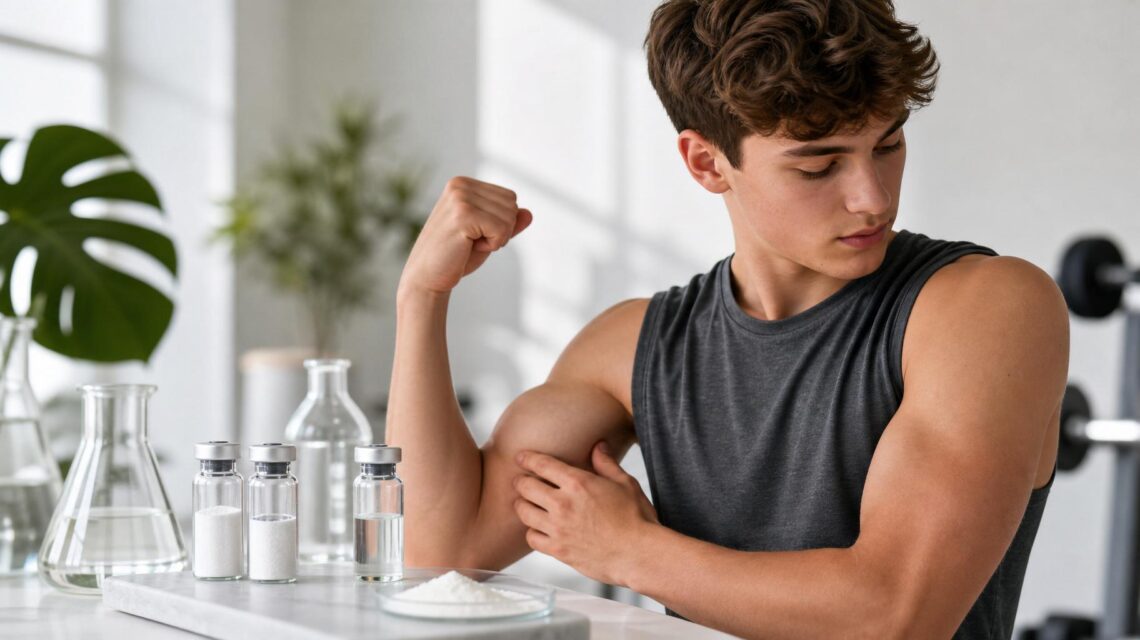
Parents, coaches, and teens are hearing more about peptides in fitness spaces, especially on social media where fast muscle gains are often promoted as normal, easy, and low risk. But when the topic is teen muscle growth, the conversation needs much more caution. Adolescence is a critical stage of physical and emotional development, and introducing substances that may affect hormones, growth signals, or body image can create serious short- and long-term consequences.
Peptides are often marketed as advanced tools for recovery, muscle building, and performance. While some have legitimate medical uses under professional supervision, others are sold online or discussed in gym culture as shortcuts to a stronger physique. For teenagers, this can be especially dangerous. At a time when the body is still developing naturally, the pressure to look bigger, leaner, or more athletic can lead to choices that prioritize appearance over health.
This article explores what peptides are, why teens may be drawn to them, the potential safety concerns, and how body image plays a major role in the growing interest around these substances.
What Are Peptides?
Peptides are short chains of amino acids that can act as signaling molecules in the body. Some peptides influence hormone release, tissue repair, appetite, metabolism, and muscle-related processes. In medical settings, certain peptides may be prescribed for specific health conditions, but that is very different from recreational or appearance-driven use.
In the fitness world, peptides are often discussed as compounds that may:
- Support muscle growth
- Improve recovery after workouts
- Increase growth hormone activity
- Help reduce body fat
- Enhance training performance
What makes this issue concerning is that many products sold online are not well regulated. Labels may be inaccurate, purity may be uncertain, and long-term safety data, especially in adolescents, may be limited or entirely absent.
Why Teens Are Interested in Peptides
Teenagers today are growing up in an environment where appearance and performance are constantly visible. Social media feeds are filled with transformation videos, supplement stacks, and unrealistic body standards. Young athletes may also feel pressure to keep up with peers in competitive sports, while others may simply want to look more muscular as part of fitting in or feeling confident.
Several factors can drive interest in peptides among teens:
- Pressure to build muscle quickly
- Desire to improve sports performance
- Influence from online creators or gym communities
- Misinformation that peptides are safer than steroids
- Body dissatisfaction and comparison culture
One of the most troubling beliefs is that peptides are somehow harmless because they are often described in scientific or medical language. That framing can make them seem more legitimate than they actually are for non-medical teen use.
Teen Muscle Growth Happens Naturally
During puberty and adolescence, the body already undergoes significant hormonal and physical changes that support muscle growth. With proper nutrition, resistance training, sleep, and recovery, many teens can make substantial progress without using risky substances.
Healthy teen muscle development is influenced by:
- Age and stage of puberty
- Genetics
- Protein and calorie intake
- Training consistency
- Sleep quality
- Overall stress and recovery
Because teen bodies are still developing, interfering with natural growth pathways may carry unknown consequences. Faster is not always better, especially when health systems are still maturing.
Safety Concerns Around Peptides for Teens
The biggest concern with peptide use in adolescents is simple: there is not enough evidence to support casual or performance-related use in this age group. Even in adults, many peptides remain controversial, poorly studied, or used in ways that fall outside medical guidelines.
Hormonal Disruption
Some peptides interact with the endocrine system, including growth hormone pathways. In teenagers, whose hormones are already fluctuating as part of normal development, this may create unpredictable effects. Altering these pathways without medical necessity could affect growth, metabolism, mood, and sexual development.
Unknown Long-Term Effects
Long-term research on peptide use in healthy teens is extremely limited. That means no one can confidently guarantee safety when these compounds are used for physique or sports goals. Even if short-term side effects seem mild, the impact over years may be unknown.
Product Quality and Contamination
Many peptides sold online are not subject to strict quality control. Products may contain the wrong dose, hidden ingredients, contaminants, or entirely different substances than advertised. For a teenager, this adds another layer of risk beyond the peptide itself.
Side Effects and Medical Complications
Depending on the compound, possible risks may include:
- Injection site reactions
- Water retention
- Joint discomfort
- Changes in blood sugar regulation
- Headaches
- Digestive issues
- Potential cardiovascular strain
When substances are used without physician oversight, side effects may go unnoticed or unreported until they become more serious.
Sports and Ethical Issues
For student athletes, another concern is compliance with sport regulations. Some peptides may be prohibited or restricted by governing bodies. A teen who uses these substances to gain an edge might also face eligibility consequences, discipline, or reputational harm.
Body Image and the Push for Bigger Muscles
The peptide conversation is not just about performance. It is deeply tied to body image. Many teen boys, and increasingly teen girls, feel pressure to achieve a specific ideal body type. For boys, that often means being large, lean, and visibly muscular. For girls, it may involve being toned while maintaining a narrow frame. These ideals are often unrealistic and heavily filtered through editing, lighting, and selective posting.
When a teen starts believing their natural body is not good enough, the risk of extreme behaviors rises. That may include restrictive dieting, compulsive exercise, supplement abuse, or turning to substances such as peptides.
Social Media’s Role
Apps and video platforms can intensify self-comparison. Teens may follow fitness influencers who promote products, routines, and physiques without disclosing genetics, editing, or drug use. This can distort expectations and make natural progress feel inadequate.
Common warning signs of unhealthy body image may include:
- Obsessive mirror checking
- Constant comparison with others
- Anxiety about missing workouts
- Extreme focus on gaining size or reducing body fat
- Shame around eating
- Secretive use of substances or supplements
Muscle Dysmorphia in Teens
Some adolescents may also struggle with symptoms related to muscle dysmorphia, a condition in which someone becomes preoccupied with the belief that they are not muscular enough, even if they are already strong or visibly fit. This mindset can fuel dangerous choices and make external reassurance less effective.
What Parents, Coaches, and Teens Should Know
The best response to the rise of peptides in youth fitness is education, not silence. Teens need accurate information about how muscle growth works, what healthy development looks like, and why quick-fix substances can carry real risks.
For Parents
- Talk openly about fitness goals and body pressures
- Ask where your teen gets information about supplements or peptides
- Watch for sudden behavioral changes around food, training, or appearance
- Encourage realistic health goals instead of appearance-only goals
- Consult a qualified healthcare professional if concerns arise
For Coaches and Trainers
- Promote strength, skill, and recovery over appearance
- Avoid glorifying rapid transformations
- Educate athletes on banned substances and health risks
- Create team cultures that reduce harmful body comparison
For Teens
- Question anything marketed as a shortcut
- Understand that muscle takes time to build naturally
- Focus on performance, energy, and consistency
- Speak to a doctor before using any hormone-related or injectable product
- Remember that online physiques do not always reflect reality