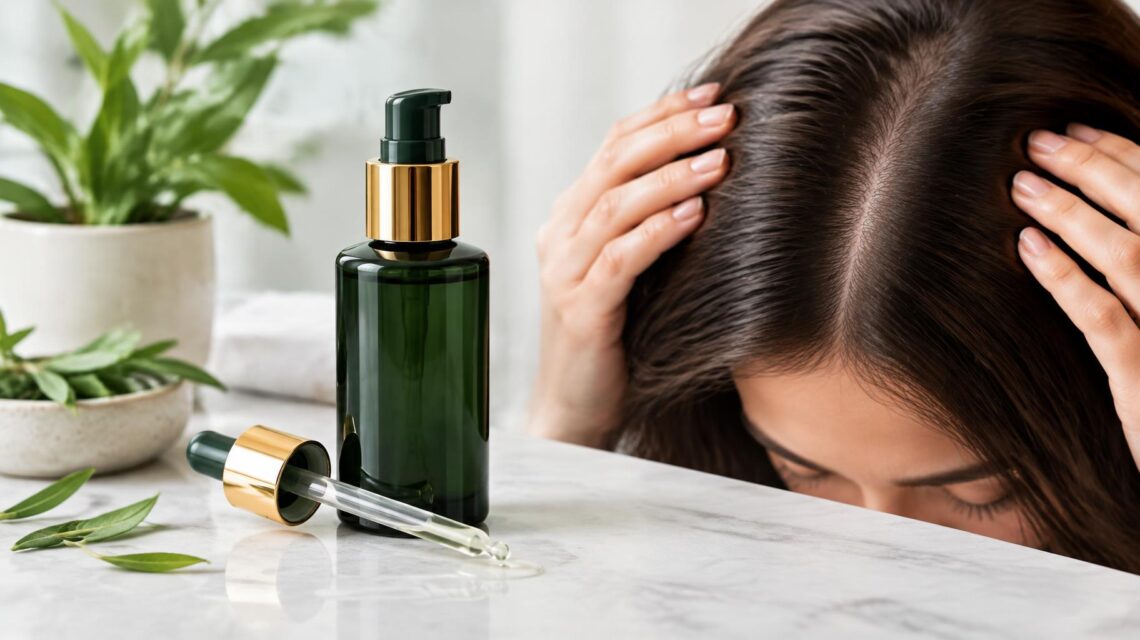
Dr. Groot hair thickening serum is a cosmetic scalp product designed to support the appearance of thicker, fuller-looking hair. But if you are considering it because you have seen it described as a peptide serum, there is an important correction: the supplied ingredient information for Dr. Groot Roll-On Hair Thickening Scalp Serum lists no peptides.
Instead, its ingredient lineup includes biotin, rosemary, free amino acids, adenosine, caffeine, retinol, and menthol. Those ingredients belong to different categories, and none should automatically be described as a peptide. Understanding that distinction makes it easier to evaluate what this serum actually offers, what its marketing means, and where the available evidence stops.
What Is Dr. Groot Hair Thickening Serum?
The product listed by Sephora is Dr. Groot Roll-On Hair Thickening Scalp Serum. The supplied listing identifies a 15 ml size priced at USD 26, although pricing and availability can change. Its roll-on format and menthol-containing formula distinguish it from a conventional dropper-style scalp serum.
According to the supplied launch announcement, Dr. Groot is associated with LG H&H and launched its haircare products at US Sephora on April 1, 2026. That retail launch provides useful brand context, but it does not establish how well an individual product performs.
The key distinction is its positioning: this is a cosmetic product marketed for thicker, fuller-looking hair, not an approved hair-loss treatment. The supplied Sephora page does not make a hair-regrowth claim.
Does Dr. Groot Hair Thickening Serum Contain Peptides?
No peptides appear in the supplied ingredient information for this specific serum. Describing it as peptide-based would therefore misrepresent its formula.
This confusion is understandable. Haircare marketing frequently groups peptides, amino acids, vitamins, and botanical ingredients under broad language about strengthening or revitalizing hair. However, those terms are not interchangeable.
Free Amino Acids Are Not Peptides
Amino acids are the building blocks from which peptides and proteins are made. A peptide consists of amino acids linked together by peptide bonds. Individual, free amino acids in a formula are not the same thing as a peptide ingredient.
Consequently, the presence of amino acids does not justify calling Dr. Groot hair thickening serum a peptide treatment. Nor does it establish that the product performs like a different serum that actually contains peptides.
The Other Highlighted Ingredients Are Not Peptides Either
- Biotin: A vitamin, not a peptide.
- Rosemary: A botanical ingredient, not a peptide.
- Adenosine: A nucleoside, not a peptide.
- Caffeine: A separate compound, not a peptide.
- Retinol: A vitamin A compound, not a peptide.
- Menthol: An ingredient associated with a cooling sensation, not a peptide.
These distinctions do not mean a formula without peptides is automatically inferior. They mean shoppers should judge the product by its actual composition and supported claims, rather than by an ingredient category it does not contain.
What Does the Serum Actually Claim to Do?
The supplied Sephora listing describes thicker, fuller-looking hair. The word looking matters: a claim about appearance is different from a claim that a product regrows hair or treats an underlying cause of thinning.
Hair can look fuller for different cosmetic reasons. Its appearance can be influenced by strand condition, breakage, styling, and how the hair sits. However, the supplied information does not establish which mechanism explains any effect from this serum alone.
That means the most accurate description stays close to the listing: a roll-on cosmetic scalp serum marketed to improve the appearance of hair fullness. It should not be promoted as proven to create new hair growth.
What Does the Available Study Information Show?
The supplied launch material reports a two-week evaluation involving 24 participants using the full four-step regimen. It reports an 82.2% reduction in breakage.
That figure needs context. It is not a serum-only result, and breakage is not the same endpoint as regrowth.
A Regimen Result Cannot Be Assigned to One Product
When participants use several products together, the reported outcome belongs to the combined routine. Without a separate evaluation isolating the serum, the available information cannot show how much, if any, of that outcome was attributable to this individual product.
Accordingly, it would be misleading to state that Dr. Groot hair thickening serum alone reduces breakage by 82.2%. The supplied evidence does not support that interpretation.
Reduced Breakage Does Not Establish Regrowth
Breakage concerns hair fibers snapping. Regrowth concerns new hair production. A result involving one does not establish the other.
The short evaluation period and small participant group also limit how broadly the result should be interpreted. The supplied material does not establish long-term serum-only performance. It is better treated as a reported result for the complete regimen, rather than proof of a hair-loss treatment effect.
Is Dr. Groot Serum a Minoxidil Alternative?
It should not be presented as a minoxidil alternative. Minoxidil is an FDA-approved over-the-counter hair-loss drug. Dr. Groot Roll-On Hair Thickening Scalp Serum is a cosmetic product.
Those categories have different purposes and evidentiary expectations. A cosmetic claim about fuller-looking hair does not establish equivalence to an approved drug, even when both products are applied to the scalp.
Similarly, the presence of familiar ingredients such as caffeine, rosemary, or adenosine does not demonstrate that the finished serum treats hair loss. Ingredient recognition is not a substitute for product-specific evidence.
How to Evaluate the Roll-On Formula
A useful product assessment separates packaging, ingredients, and evidence instead of treating them as one promise.
Consider the Format Without Confusing It With Efficacy
The roll-on applicator is a practical packaging feature. Whether that format appeals to you is a matter of preference. It does not, by itself, establish better delivery, absorption, or results than another application method.
Likewise, a cooling sensation from menthol should not be interpreted as proof that a product is stimulating growth. Sensory experience and demonstrated efficacy are separate considerations.
Check the Complete Ingredient List
Highlighted ingredients tell only part of a formula story. The complete ingredient list is more useful when checking for peptides or ingredients you prefer to avoid.
Formulas and listings can change, so compare the current packaging with the current retailer information. For the version covered by the supplied sources, however, the conclusion is straightforward: there are no peptides in the listed formula.
Is Dr. Groot Hair Thickening Serum Worth Considering?
That depends on what you expect from it. Someone interested in a cosmetic scalp serum with a roll-on format may find its positioning relevant. Someone specifically shopping for a peptide formula would not be getting that ingredient category here.
The most useful buying checklist is simple:
- Choose based on the actual formula, not a peptide label that does not apply.
- Read fuller-looking hair as an appearance claim, not a regrowth promise.
- Keep the four-step regimen findings separate from serum-only performance.
- Do not treat cooling sensations or recognizable ingredients as proof of efficacy.
- Verify current price, packaging, and ingredients before purchasing.
The Bottom Line
Dr. Groot hair thickening serum is not peptide-based. Its supplied ingredient information lists vitamins, botanical ingredients, free amino acids, and other compounds, but no peptides. Its cosmetic positioning concerns thicker, fuller-looking hair, not demonstrated regrowth.
The reported breakage finding applies to a complete four-step regimen, not the serum in isolation. Keeping those boundaries clear allows a fair assessment without dismissing the product or exaggerating what it can do.