The best peptides for menopause are not magic hormone replacements. They are supportive tools that may help with some of the visible and physical changes that become more noticeable during perimenopause and menopause, especially skin dryness, loss of firmness, hair thinning, joint comfort, and muscle maintenance. The safest way to talk about peptides for menopause is to separate cosmetic and nutritional support from medical treatment.
Menopause is a normal life stage, but the symptoms can be very real. Hot flashes, night sweats, sleep disruption, mood changes, vaginal dryness, changes in body composition, joint discomfort, and hair or skin changes can all appear during the transition. Peptides may be useful for skin, hair, and nutrition support, but they are not the most effective treatment for vasomotor symptoms such as hot flashes and night sweats. For those symptoms, evidence-based menopause care, including hormone therapy for appropriate candidates, should be discussed with a qualified clinician.
Collagen peptides are the most common peptide supplement associated with menopause and healthy aging. Collagen is a structural protein found in skin, tendons, ligaments, cartilage, and bone-supporting tissues. Collagen peptides are broken-down forms of collagen that are easier to mix into drinks or foods. They are not a complete protein, and they do not go directly from your coffee to your face, but some studies suggest collagen peptides may support skin hydration and elasticity. They may also be helpful for joint comfort in some people.
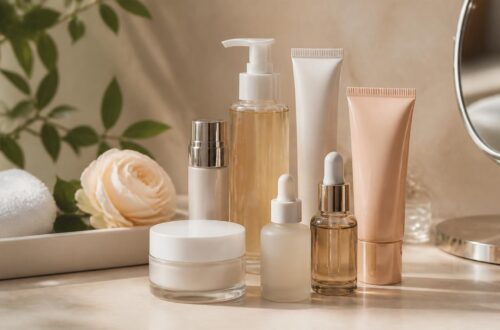
For skin during menopause, topical peptides are often more directly relevant than supplements. As estrogen declines, many women notice drier skin, thinner-looking skin, slower bounce-back, and more visible fine lines. A peptide serum or moisturizer can help support the appearance of firmness and smoothness, especially when paired with barrier-repair ingredients. Look for signal peptides such as palmitoyl tripeptide-1, palmitoyl tetrapeptide-7, palmitoyl pentapeptide-4, or multi-peptide complexes. Copper peptides, such as copper tripeptide-1, may also be appealing for skin resilience.
The best menopause skin routine does not need to be complicated. In the morning, use a gentle cleanser, peptide or antioxidant serum, moisturizer, and broad-spectrum sunscreen. At night, use a gentle cleanser, peptide moisturizer or serum, and a richer barrier cream if needed. If your skin tolerates retinoids, a retinol or retinal product can be alternated with peptides. If your skin is newly sensitive, prioritize fragrance-free formulas, ceramides, glycerin, niacinamide, and peptides before adding stronger actives.
For menopausal hair thinning, topical scalp peptides may be worth considering. Many women notice a wider part, thinner ponytail, or more shedding around perimenopause and menopause. This can be related to hormonal shifts, androgen sensitivity, genetics, stress, thyroid changes, iron deficiency, medication changes, or nutrition. Peptides such as copper tripeptide-1, acetyl tetrapeptide-3, and biotinoyl tripeptide-1 are common in scalp serums marketed for density and fuller-looking hair. They may support the appearance of thicker hair, but they do not replace medical evaluation if loss is significant or progressing.
For hair, the best peptide strategy is a leave-on scalp serum plus a plan. Apply the serum to the scalp consistently for at least 12 weeks. Pair it with a gentle shampoo, scalp care if dandruff or inflammation is present, and a protein-rich diet. If pattern hair loss is suspected, ask a dermatologist about minoxidil or other evidence-based options. Peptides can support the routine, but they should not delay treatment.
For muscle and body composition during menopause, the conversation around peptides can get confusing. Collagen peptides can support overall protein intake, but they are low in some essential amino acids compared with complete proteins. For muscle maintenance, prioritize resistance training and adequate complete protein from foods such as Greek yogurt, eggs, fish, poultry, soy, beans plus grains, or a complete protein powder if needed. Collagen can be an add-on, not the whole protein plan.
Some injectable peptides are marketed for menopause, fat loss, sleep, libido, recovery, or anti-aging. This is where caution is important. Many of these wellness peptides are not approved for those uses, and evidence may be limited. Some may carry risks related to dosing, purity, immune reactions, side effects, drug interactions, or contamination. If a peptide is sold online as a research chemical or promoted through a one-size-fits-all protocol, it is not a safe menopause plan.
The best peptides for menopause depend on the goal. For skin firmness and dryness, choose topical multi-peptides with ceramides, niacinamide, glycerin, and sunscreen. For under-eye texture, choose a peptide eye cream with hydration and barrier support. For hair density, choose a leave-on scalp serum with copper peptides or biomimetic peptides. For joint comfort and skin hydration, collagen peptides may be worth discussing with your healthcare provider, especially if they fit your nutrition plan.
What peptides cannot do is just as important. They cannot replace hormone therapy for someone who needs medical menopause treatment. They cannot reliably stop hot flashes, rebuild bone, reverse advanced hair loss, or fix sleep disruption caused by night sweats. They cannot replace strength training, adequate protein, vitamin D and calcium assessment, or medical care for genitourinary symptoms.
A smart menopause peptide routine is supportive, not extreme. Use topical peptides for skin and scalp. Consider collagen peptides as a nutrition add-on if they fit your goals. Avoid unregulated injectable peptides. Treat major symptoms with evidence-based care. The best result comes from combining realistic peptide use with sunscreen, strength training, adequate protein, sleep support, and a clinician who understands menopause.
A practical menopause peptide plan can be very simple. In the bathroom, use topical peptides where they make sense: face, eyes, neck, and scalp. In the kitchen, consider collagen peptides only if they help you hit your nutrition goals and do not replace complete protein. In the gym, prioritize progressive strength training because muscle is one of the most important assets to protect during midlife. In the doctor’s office, discuss symptoms that interfere with sleep, sex, mood, bones, or daily life. Peptides can be part of a polished healthy-aging routine, but they are not the foundation. The foundation is evidence-based menopause care, strength, protein, sleep, sunscreen, and consistency.