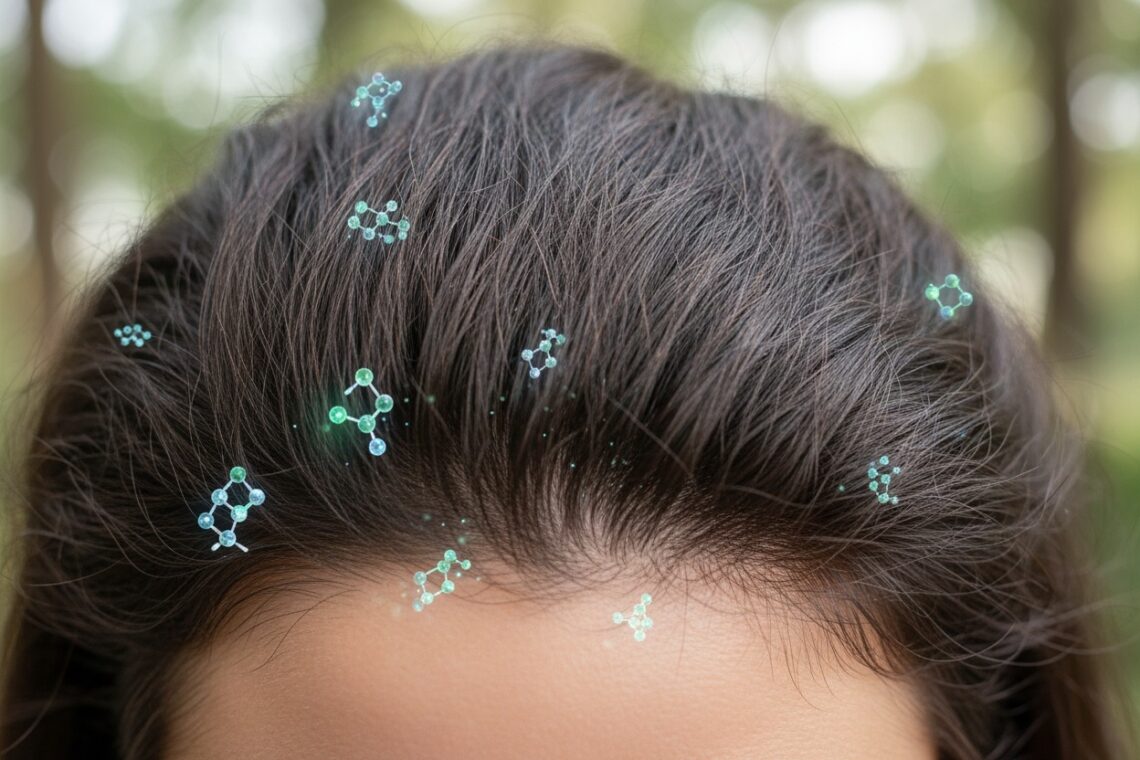
The best peptides for hair growth are usually topical scalp-care ingredients, not random injectable peptides promoted online. That distinction matters. Hair growth is complicated, and many people searching for peptides are trying to solve shedding, thinning, widening parts, receding hairlines, menopause-related changes, or breakage. Peptides may support a healthier scalp environment and thicker-looking hair, but they should be understood as supportive ingredients, not guaranteed cures.
Peptides are short chains of amino acids. In hair products, they are used to support the appearance of stronger, fuller, healthier hair and, in some formulas, to target the follicle environment. They may appear in scalp serums, hair density treatments, shampoos, conditioners, and leave-in products. The most talked-about peptide categories for hair growth include copper peptides, biomimetic peptides, and keratin or amino-acid peptide complexes.
Copper peptides are probably the best-known peptide option for hair growth. You may see them listed as copper tripeptide-1, GHK-Cu, or related copper peptide complexes. Copper peptides are used in skin care for repair and collagen support, and in scalp care they are often marketed for supporting follicle health, scalp circulation, and the look of thicker hair. Early research and cosmetic use suggest promise, but copper peptides should not be treated as a replacement for proven hair-loss medications when true androgenetic alopecia is present.
Biomimetic peptides are another important category. These are synthetic peptides designed to mimic signals that occur naturally in the body. In hair serums, you may see ingredients such as acetyl tetrapeptide-3 or biotinoyl tripeptide-1. Acetyl tetrapeptide-3 is often used in formulas marketed for anchoring hair and improving the look of density. Biotinoyl tripeptide-1 is commonly found in peptide blends associated with stronger-looking strands and healthier follicles. These ingredients are often paired with red clover extract, caffeine, niacinamide, or botanical extracts.
Keratin peptides and hydrolyzed proteins are different from follicle-targeting peptides, but they can still be useful. They do not usually regrow hair from the scalp. Instead, they help the hair fiber look smoother, stronger, and less prone to breakage. If your hair feels thin because it is snapping, frizzy, overprocessed, or fragile, a peptide or protein conditioner may make a visible difference. If your hair is thinning from the root, a leave-on scalp serum is more relevant.
When choosing peptides for hair growth, the first question is whether you are dealing with hair loss or hair breakage. Hair loss happens at the follicle and may show up as shedding, thinning at the part, a receding hairline, patchy loss, or reduced ponytail density. Breakage happens along the hair shaft and may show up as short broken pieces, frizz, split ends, or hair that never seems to grow past a certain length. Peptide scalp serums are more relevant for follicle support. Protein and keratin peptide products are more relevant for breakage.
The second question is the cause of the thinning. The most common long-term cause is androgenetic alopecia, also known as pattern hair loss. It can affect men and women and often becomes more noticeable with age, hormonal changes, or menopause. Other causes include telogen effluvium after stress, illness, childbirth, rapid weight loss, medication changes, thyroid issues, iron deficiency, vitamin D deficiency, autoimmune conditions, tight hairstyles, and scalp inflammation. Peptides may support the look of hair, but they will not correct an untreated medical trigger.
For people with true pattern hair loss, topical minoxidil has stronger evidence than peptide serums. That does not mean peptides are useless. It means the best approach may be a layered one: use proven treatment as the foundation, then add a peptide scalp serum for cosmetic density, scalp support, or hair-fiber health. A dermatologist can help decide whether minoxidil, finasteride, spironolactone, low-dose oral minoxidil, PRP, lab testing, or another option is appropriate.
A good peptide hair-growth serum should be leave-on, lightweight, and easy to use consistently. Daily use matters more than occasional use. Apply it to a clean scalp, not just the hair. Part the hair, apply directly to thinning areas, massage lightly, and let it dry. Most hair products need at least three months before you can fairly judge results because hair cycles are slow. Take photos of your part and hairline every four weeks in the same lighting.
The best companion ingredients for peptide scalp serums include caffeine, niacinamide, panthenol, hyaluronic acid, rosemary extract, green tea, zinc, and soothing ingredients that support scalp comfort. Avoid formulas that irritate your scalp. Irritation can worsen shedding or make you quit before the product has time to work.
Be cautious with injectable peptides sold for hair growth, anti-aging, or hormone optimization. Many wellness peptides online are not FDA-approved for those uses, may have limited human evidence, and may carry purity, dosing, and safety concerns. If a peptide is being sold as a “research chemical” or promoted in a vague biohacking protocol, it is not the same as using a cosmetic scalp serum.
So, what are the best peptides for hair growth? For scalp support, look for copper tripeptide-1, GHK-Cu, acetyl tetrapeptide-3, and biotinoyl tripeptide-1 in leave-on serums. For fragile strands, look for keratin peptides and hydrolyzed proteins. For pattern hair loss, do not skip proven treatments in favor of peptides alone. The best peptide strategy is realistic: support the scalp, strengthen the strands, stay consistent, and address the real cause of thinning.
Before buying a peptide hair serum, check whether the product is meant for the scalp or the hair shaft. A scalp serum should have a nozzle, dropper, or applicator that lets you reach the skin. A hair-strengthening product may be applied from mid-lengths to ends. If you apply a strand product to your scalp, it may just make your roots greasy. If you apply a scalp product only to the hair, it may never reach the follicle environment. For best results, keep your routine boring: apply consistently, avoid harsh brushing, protect fragile lengths, and do not switch products every two weeks. Hair routines fail more often from inconsistency than from choosing the second-best peptide.