The pursuit of bronzed skin has fueled demand for tanning products for decades, but not all shortcuts to a darker complexion are safe. A growing body of concern now surrounds Melanotan-II, an unlicensed synthetic tanning drug that has been promoted online and through underground markets as a fast way to stimulate skin pigmentation. Recent reporting linking Melanotan-II to abnormal moles is another warning sign that this substance may carry serious health risks that users do not fully understand.
While the appeal of a sun-kissed appearance remains strong, experts continue to stress that products like Melanotan-II are not harmless beauty aids. Instead, they may interfere with the body in unpredictable ways, especially when used without medical supervision. The latest concerns over changes in moles and pigmented skin lesions add urgency to public health messaging around the dangers of unregulated tanning drugs.
What Is Melanotan-II?
Melanotan-II is a synthetic compound designed to mimic the action of hormones involved in melanin production, the pigment responsible for skin color. It has been marketed as a drug that can darken the skin without prolonged sun exposure. Some users take it by injection or nasal spray, often purchasing it from unofficial online sellers.
Although it is sometimes promoted as a convenient alternative to tanning beds or sunbathing, Melanotan-II is not approved for cosmetic tanning use in many countries. Health authorities have repeatedly warned that products sold under this name may be counterfeit, contaminated, mislabeled, or incorrectly dosed.
The concern is not limited to basic side effects. Because the drug acts on pigmentation pathways, it may also alter the appearance of the skin in more troubling ways, including the development of new moles or changes in existing ones.
Why Abnormal Moles Are Raising Alarm
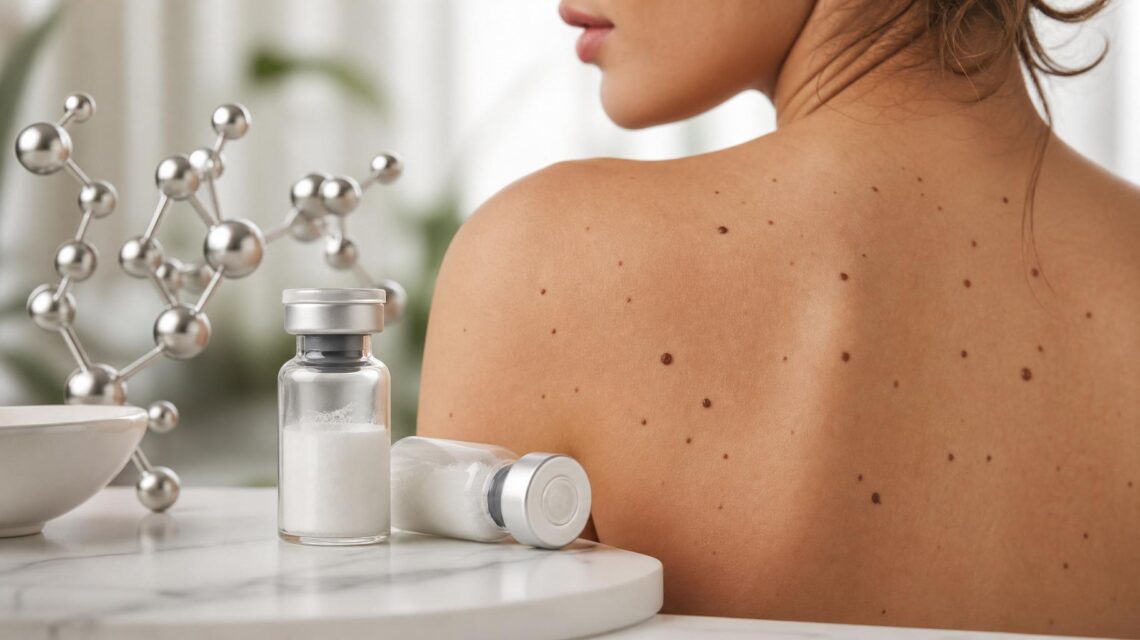
Moles are common skin growths made up of pigment-producing cells called melanocytes. Most moles are benign, but changes in their size, shape, color, or number can be important warning signs. Reports linking Melanotan-II to abnormal moles suggest the drug may stimulate melanocytes in a way that leads to unusual pigmentation patterns or visible skin changes.
This matters because abnormal moles can sometimes resemble, or potentially develop into, more serious skin conditions such as melanoma, the deadliest form of skin cancer. Not every changing mole is cancerous, but any unexplained evolution in skin lesions deserves prompt medical evaluation.
Experts are especially concerned because users of Melanotan-II may not realize that:
- New dark spots can emerge after using the drug
- Existing moles may become larger or darker
- Changes in pigmentation can mask early warning signs of skin disease
- Unregulated products may contain unknown ingredients that add further risk
When a tanning product affects the very cells involved in mole formation, careful monitoring becomes essential. Unfortunately, people who self-administer these substances are often doing so without guidance from dermatologists or other trained professionals.
How Melanotan-II Works in the Body
Melanotan-II works by interacting with melanocortin receptors, influencing melanin production and increasing skin darkening. That mechanism is exactly what makes it attractive to people seeking a tan without heavy UV exposure. However, stimulating pigmentation is not a simple cosmetic trick. It involves changing biological activity in cells that are directly relevant to skin health.
The body does not always respond predictably to synthetic hormone-like compounds. In addition to darkening the skin, Melanotan-II has also been associated with side effects such as:
- Nausea
- Flushing
- Appetite changes
- Spontaneous erections in some users
- Uneven pigmentation
- Changes to moles and freckles
Because many of these products come from unregulated sources, users may not even know the exact concentration they are taking. That uncertainty increases the risk of unintended reactions and makes it harder for doctors to assess exposure if complications arise.
The Bigger Problem With Underground Tanning Drugs
The concern over abnormal moles is part of a larger issue: the underground market for aesthetic performance drugs. Melanotan-II has circulated for years in online bodybuilding forums, beauty communities, and social media spaces where appearance-focused products are often glamorized before their safety is investigated.
These products are often sold with bold claims and very little accountability. In many cases:
- There is no verified manufacturing standard
- Storage and shipping conditions may compromise product stability
- Instructions for use are inconsistent or misleading
- Consumers rely on anecdotal advice instead of medical evidence
That combination creates a dangerous environment where people experiment with their health in pursuit of faster cosmetic results. Even if the desire is understandable, the method can carry consequences far beyond a temporary tan.
Why Skin Changes Should Never Be Ignored
Any skin product that causes moles to appear or change should be treated with caution. Dermatologists typically advise patients to watch for the classic warning signs often summarized as the ABCDE rule:
- Asymmetry: one half looks different from the other
- Border: edges are irregular, blurred, or ragged
- Color: multiple shades or uneven pigmentation are present
- Diameter: the spot is growing or is larger than expected
- Evolving: the mole changes over time in any noticeable way
If someone using Melanotan-II notices any of these features, or sees a sudden increase in moles, they should seek a professional skin examination as soon as possible. Waiting to see if a lesion settles down on its own can delay the diagnosis of a more serious condition.
The False Promise of a ‘Safer Tan’
One reason Melanotan-II gained traction is the perception that it offers a safer tan than spending hours under the sun or in tanning beds. It is true that excessive UV exposure is a major risk factor for skin aging and skin cancer. But replacing UV damage with an unapproved synthetic tanning drug is not a proven solution.
There is a critical difference between avoiding ultraviolet radiation and using an unregulated hormone-like substance. A product does not become safe simply because it is marketed as an alternative to another harmful habit. The safety profile still has to be demonstrated through proper clinical research, quality control, and regulatory review.
At present, the concerns around abnormal moles only reinforce that Melanotan-II is not a casual cosmetic product. It is a biologically active substance with effects that may extend well beyond skin color.
Safer Alternatives for a Tanned Look
For people who want a bronzed appearance without excessive sun exposure, safer options do exist. These alternatives do not stimulate melanocytes in the same way and generally carry far fewer systemic risks when used properly.
Self-Tanning Products
Lotions, mousses, and sprays containing dihydroxyacetone can temporarily darken the outer layer of the skin without altering moles or affecting pigmentation pathways deep within the body.
Professional Spray Tans
Salon-applied spray tans can provide a more even finish and are popular for events or vacations. They are cosmetic surface treatments rather than internal medications.
Bronzing Makeup and Body Products
Wash-off bronzers, tinted moisturizers, and body makeup allow users to control their look without exposing themselves to UV rays or injectable compounds.
Even with these alternatives, experts recommend continuing to use broad-spectrum sunscreen daily, since a cosmetic tan does not protect against sunburn or long-term UV damage.
What Consumers Should Take Away
The link between Melanotan-II and abnormal moles is a serious reminder that not every beauty trend is benign. When a product changes how pigment cells behave, the effects may not stop at a darker complexion. New moles, altered freckles, and evolving pigmented lesions are not side effects to dismiss, especially given the broader context of skin cancer awareness.
Consumers should be skeptical of products sold through unofficial channels that promise dramatic cosmetic results with little risk. If a tanning drug is unlicensed, poorly regulated, and associated with visible skin changes, that should be more than enough reason to avoid it.
Anyone who has used Melanotan-II and notices unusual skin changes should arrange a consultation with a dermatologist or qualified healthcare provider.