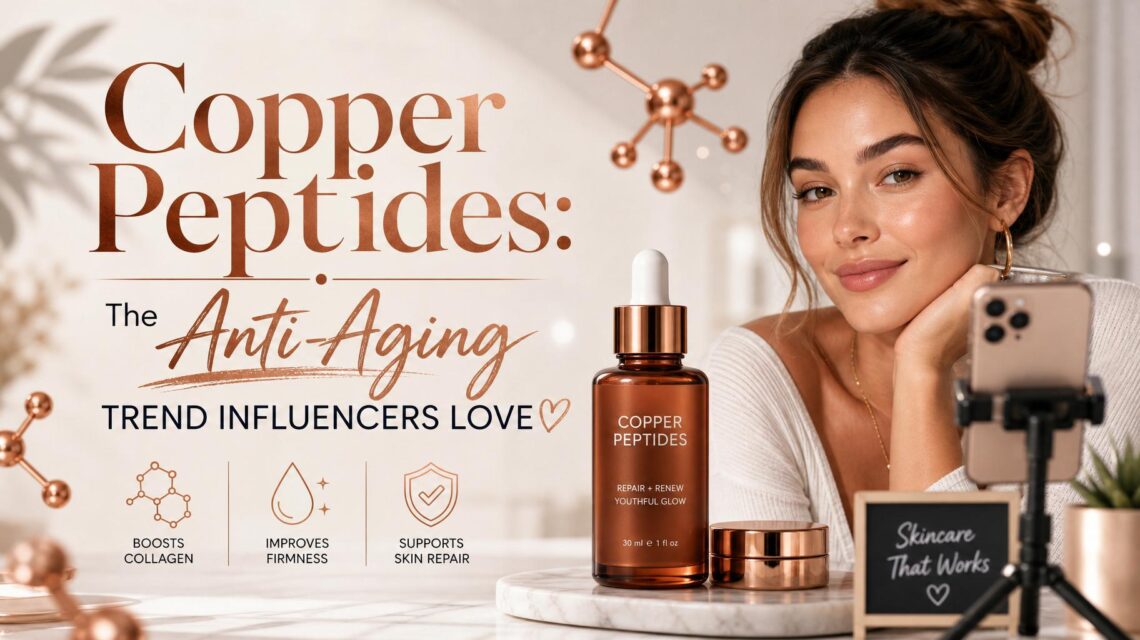
Scroll through skincare TikTok or Instagram for more than a few minutes, and one ingredient keeps showing up in conversations about smoother texture, firmer-looking skin, and a more radiant complexion: copper peptides. Loved by influencers, praised by skincare enthusiasts, and increasingly featured in premium serums and creams, copper peptides have become one of the most talked-about anti-aging ingredients in beauty.
But this trend is more than social media hype. Copper peptides have been studied for their potential role in supporting the skin’s natural repair processes, improving the appearance of fine lines, and helping the skin look healthier over time. If you are wondering whether they deserve a place in your routine, it helps to understand what they are, how they work, and how to use them correctly.
What Are Copper Peptides?
Copper peptides are naturally occurring complexes made from copper ions and small protein fragments called peptides. In skincare, the most well-known form is often referred to as GHK-Cu, a copper peptide complex that has gained attention for its skin-rejuvenating properties.
Peptides on their own are already popular in skincare because they help support the skin barrier and can signal the skin to perform certain functions. When combined with copper, these peptides become especially interesting because copper is a trace mineral involved in several biological processes, including wound healing and tissue repair.
That connection is a major reason copper peptides are associated with anti-aging skincare. Rather than acting like a quick-fix coating on the skin, they are often valued for their ability to support the skin’s overall function and resilience.
Why Copper Peptides Are Trending in Anti-Aging Skincare
The skincare world is always looking for ingredients that can deliver visible results without the harshness sometimes associated with strong exfoliants or prescription actives. Copper peptides fit neatly into that demand. They are seen as a science-backed, skin-supportive ingredient that can work well in many routines.
Influencers love copper peptides because they are easy to position as a luxury, high-performance skincare step. The ingredient often appears in sleek blue serums, premium moisturizers, and regenerative formulas that promise healthier-looking skin. But beyond the aesthetic appeal, many users are drawn to copper peptides because they target several common concerns at once.
- Fine lines and wrinkles
- Loss of firmness
- Uneven skin texture
- Dullness
- Compromised skin barrier
- Post-breakout marks and visible redness
That multitasking reputation has helped fuel their rise among both influencers and consumers looking for a more comprehensive anti-aging solution.
How Copper Peptides May Benefit the Skin
1. Support for Collagen and Elastin
One of the biggest reasons copper peptides are associated with anti-aging is their role in supporting collagen and elastin, two proteins that help keep skin looking firm and smooth. As skin ages, natural collagen production declines, which can contribute to sagging and wrinkles.
Copper peptides are believed to help encourage processes tied to skin renewal and structural support. While they are not a magic eraser for deep lines, they may help skin appear plumper, stronger, and more youthful over time when used consistently.
2. Improved Skin Repair
Copper is involved in the skin’s natural healing response, which is why copper peptides are often discussed in connection with repair. This makes them appealing for people dealing with stressed, tired, or environmentally damaged skin. They may help improve the overall look of skin recovery, especially when the barrier feels weakened.
3. Antioxidant Support
Environmental stressors such as pollution and UV exposure can contribute to premature aging. Copper peptides may offer antioxidant benefits, helping the skin defend itself against oxidative stress. This can play a role in maintaining a brighter and healthier appearance.
4. Smoother, More Even Texture
Many users report that copper peptide products help their skin feel smoother and look more refined. This may be due to the ingredient’s supportive role in skin renewal. Over time, the complexion may appear softer, more even, and less rough.
5. Barrier-Friendly Anti-Aging Care
Unlike some anti-aging ingredients that can be drying or irritating, copper peptides are often marketed as a gentler option. That makes them appealing to people who want visible skin support but struggle with sensitivity. While every product is different, copper peptides are generally seen as a more soothing addition to a routine.
Are Copper Peptides Better Than Retinol?
This is one of the most common skincare questions, but the answer depends on your skin goals. Retinol is still considered one of the gold-standard ingredients for addressing signs of aging because it boosts cell turnover and can improve wrinkles, texture, and discoloration. However, it can also cause dryness, peeling, and irritation.
Copper peptides are different. They are usually positioned as supportive and restorative rather than aggressively renewing. For some people, especially those with sensitive or reactive skin, they may feel easier to tolerate than retinol. That does not necessarily make them better, but it may make them more suitable in certain routines.
Some people use both ingredients, but not always in the same application. Depending on the formula and skin sensitivity, alternating copper peptides and retinoids can be a smart approach. As always, the effectiveness depends on product formulation, concentration, and consistency of use.
How to Use Copper Peptides in Your Skincare Routine
If you are interested in trying copper peptides, it is usually best to start with a serum. Serums tend to deliver concentrated ingredients in lightweight formulas that layer easily with moisturizers and sunscreen.
Basic Routine Placement
- Cleanser
- Toner or essence if you use one
- Copper peptide serum
- Moisturizer
- Sunscreen in the morning
Most people use copper peptides once or twice daily, depending on the instructions on the product label. Because these formulas can vary, it is important to follow brand directions rather than assuming every product should be used the same way.
Pairing Copper Peptides With Other Ingredients
Many skincare users wonder what copper peptides can be mixed with. In general, they may work well alongside hydrating and barrier-supportive ingredients such as:
- Hyaluronic acid
- Ceramides
- Niacinamide
- Glycerin
- Gentle moisturizers
There has been debate around using copper peptides with direct acids or pure vitamin C in the same routine, as some believe these combinations can affect stability or performance. While views differ and modern formulations may be designed to work around such issues, cautious users often separate them. For example, they might use vitamin C in the morning and copper peptides at night.
What to Look for When Buying Copper Peptide Products
Not all copper peptide skincare is created equal. Because the ingredient has become trendy, some products may lean heavily on marketing while offering unclear concentrations or less thoughtful formulations.
When choosing a copper peptide product, look for:
- Transparent ingredient lists
- Reputable skincare brands with strong formulation standards
- Packaging that protects the formula from light and air
- Supporting ingredients that promote hydration and barrier health
- Clear usage instructions
It is also smart to patch test any new skincare product, especially if you have sensitive skin or are already using several active ingredients.
Who Should Try Copper Peptides?
Copper peptides may be worth considering if you want an anti-aging ingredient that focuses on skin support, recovery, and overall resilience. They can be especially appealing for:
- People noticing early signs of aging
- Those with dry or sensitive skin
- Anyone looking to improve firmness and texture
- Skincare users who want an alternative or complement to stronger actives
- People focused on skin barrier health