A healthy scalp is the foundation of stronger, fuller-looking hair. Yet many people focus only on styling, shine, or volume without realizing that some everyday products may be doing more harm than good. If your scalp often feels itchy, tight, flaky, or sore, your hair care routine could be part of the problem. Certain ingredients and product types can trigger irritation, clog follicles, create buildup, and ultimately make it harder for hair to thrive.
While no product instantly stops hair growth altogether, repeated scalp stress can contribute to breakage, shedding, and an unhealthy environment for new growth. Understanding which products may be working against you is an important step toward improving scalp comfort and supporting healthier hair over time. Below are eight common hair product categories that can irritate the scalp and potentially slow growth, plus smarter alternatives to consider.
Why Scalp Health Matters for Hair Growth
Your scalp is skin, and just like the skin on the rest of your body, it reacts to harsh ingredients, allergens, friction, and buildup. When the scalp becomes inflamed or imbalanced, hair follicles may not function at their best. This can lead to increased shedding, weaker strands, and hair that appears thinner or grows less efficiently.
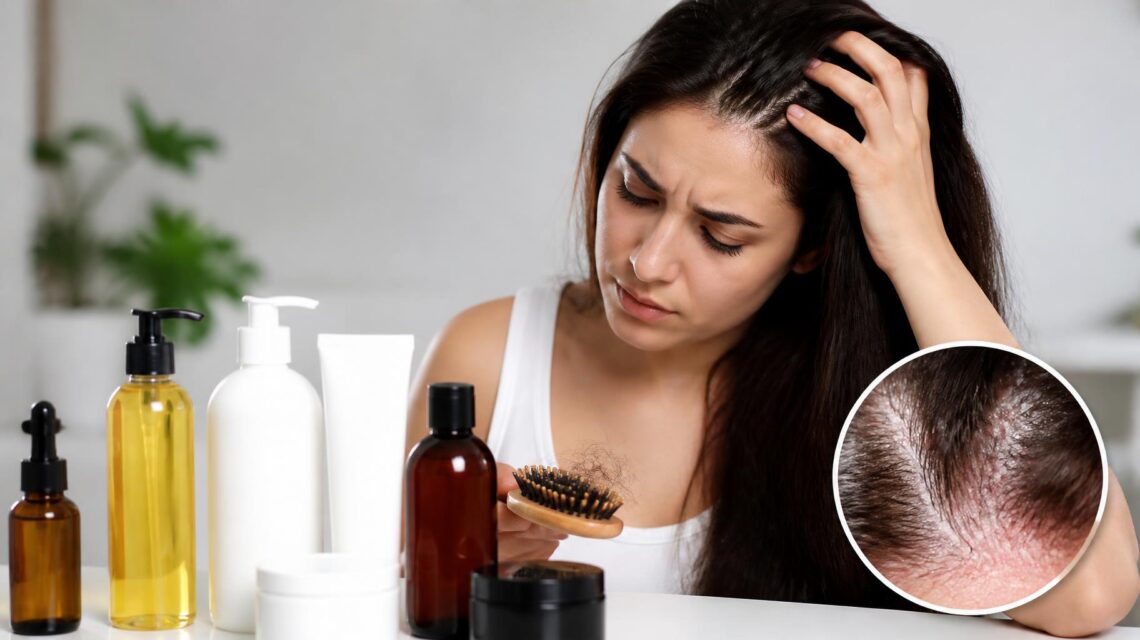
Common signs of a stressed scalp include:
- Persistent itching
- Redness or tenderness
- Dry flakes or greasy scaling
- A burning sensation after product use
- Breakage close to the roots
- Excessive buildup that makes hair feel heavy
Choosing products that support the scalp rather than overwhelm it can make a noticeable difference in both comfort and long-term hair quality.
1. Harsh Clarifying Shampoos
Clarifying shampoos can be helpful when used occasionally, especially if you use a lot of styling products. The problem starts when formulas are too aggressive or used too often. Many clarifying shampoos contain strong detergents that strip away not only residue, but also the scalp’s natural protective oils.
When that barrier is disrupted, the scalp may become dry, irritated, and more prone to flaking. In some cases, the skin responds by producing even more oil, creating a frustrating cycle of dryness and greasiness.
What to watch for
- Sulfate-heavy formulas used multiple times per week
- Scalp tightness after washing
- Increased flaking or itchiness
Better option: Use a gentle, pH-balanced shampoo for regular washes and reserve clarifying formulas for occasional buildup removal.
2. Dry Shampoos Used Too Frequently
Dry shampoo is one of the most convenient products in modern hair care, but overuse can create issues at the scalp level. These products absorb oil, but they also leave behind particles that can accumulate around the follicles. If not washed out regularly, this buildup may contribute to itchiness, clogged pores, and scalp sensitivity.
Some dry shampoos also contain alcohol or fragrance ingredients that can further irritate already sensitive skin. If you’re relying on dry shampoo several days in a row, your scalp may not be getting the reset it needs.
Why it can interfere with healthy growth
- Buildup can block a clean follicle environment
- Frequent use may worsen inflammation
- Scratching an itchy scalp can lead to breakage
Better option: Use dry shampoo sparingly, focus it on the hair rather than the scalp when possible, and cleanse thoroughly after a day or two.
3. Heavy Oils and Greasy Scalp Treatments
Hair oils can be beneficial in the right formula and amount, but heavy applications directly on the scalp are not always helpful. Thick oils may trap sweat, dead skin, and dirt, especially if applied often without proper cleansing. For some people, this can lead to irritation, follicle congestion, or worsening dandruff-like symptoms.
Natural does not always mean non-irritating. Even botanical oils can trigger reactions in sensitive individuals, particularly if essential oils are added at high concentrations.
Potential problem ingredients and habits
- Castor oil used excessively on the scalp
- Undiluted essential oils
- Leaving oily treatments on for long periods without washing
Better option: Choose lightweight scalp serums designed for skin health, and patch test any new oil before applying it widely.
4. Alcohol-Heavy Styling Products
Many mousses, gels, sprays, and volumizers contain drying alcohols that help the product dry quickly and hold shape. While that may be useful for styling, frequent contact with the scalp can leave the skin dehydrated and irritated. This is especially true for people with eczema, psoriasis, dandruff, or a naturally sensitive scalp.
Dryness can also make the hair shaft more brittle, leading to snapping and the appearance of slower growth because strands break before they gain length.
Products to monitor
- Strong-hold hairsprays
- Crunchy gels applied from root to tip
- Root-lifting sprays with high alcohol content
Better option: Look for alcohol-free or low-alcohol styling products and avoid saturating the scalp when applying them.
5. Fragranced Hair Products
Fragrance is one of the most common causes of cosmetic irritation. Many shampoos, conditioners, scalp masks, and styling products contain synthetic fragrance blends that smell appealing but can provoke redness, itching, or allergic contact dermatitis. Even when the scalp does not react immediately, repeated exposure can gradually increase sensitivity.
If your scalp stings during washing or feels irritated after styling, fragrance could be part of the issue. This is particularly important for anyone with sensitive skin or a history of allergies.
Common signs of fragrance sensitivity
- Burning or itching after product use
- Red patches near the hairline or behind the ears
- Flaking that does not improve with dandruff shampoo
Better option: Switch to fragrance-free or sensitive-scalp formulations whenever possible.
6. Protein-Loaded Treatments Used Excessively
Protein treatments can help reinforce damaged hair, but too much of a good thing may create stiffness and brittleness. While protein itself does not necessarily irritate the scalp, overuse of intense reconstruction products can leave hair rough and prone to snapping, which may make growth progress seem stalled.
Some strengthening products are also paired with strong fragrances or active ingredients that can bother the scalp if used too often or left on too long.
Warning signs of protein overload
- Hair feels hard instead of soft
- Ends break easily
- Hair appears dull and tangled
Better option: Balance strengthening masks with moisture-rich conditioners and use intense treatments only as directed.
7. Edge Control, Waxes, and Pomades
Sleek hairstyles often rely on waxes, edge controls, and pomades that sit heavily at the roots. These products can create stubborn buildup that is difficult to remove, especially when layered day after day. If the scalp is not cleansed properly, residue may block follicles, trap sweat, and increase irritation.
These products are also often used alongside tight styling, which adds tension. The combination of buildup and pulling can be particularly stressful for the hairline.
Why they may be problematic
- Heavy residue on the scalp
- Increased need for harsh cleansing to remove buildup
- Tension-related stress at the roots
Better option: Use lightweight stylers when possible, avoid daily layering, and give the hairline regular breaks from slick styles.
8. Chemical Treatments and Relaxing Products
Hair dyes, bleach, relaxers, and texturizers can all be harsh on the scalp,