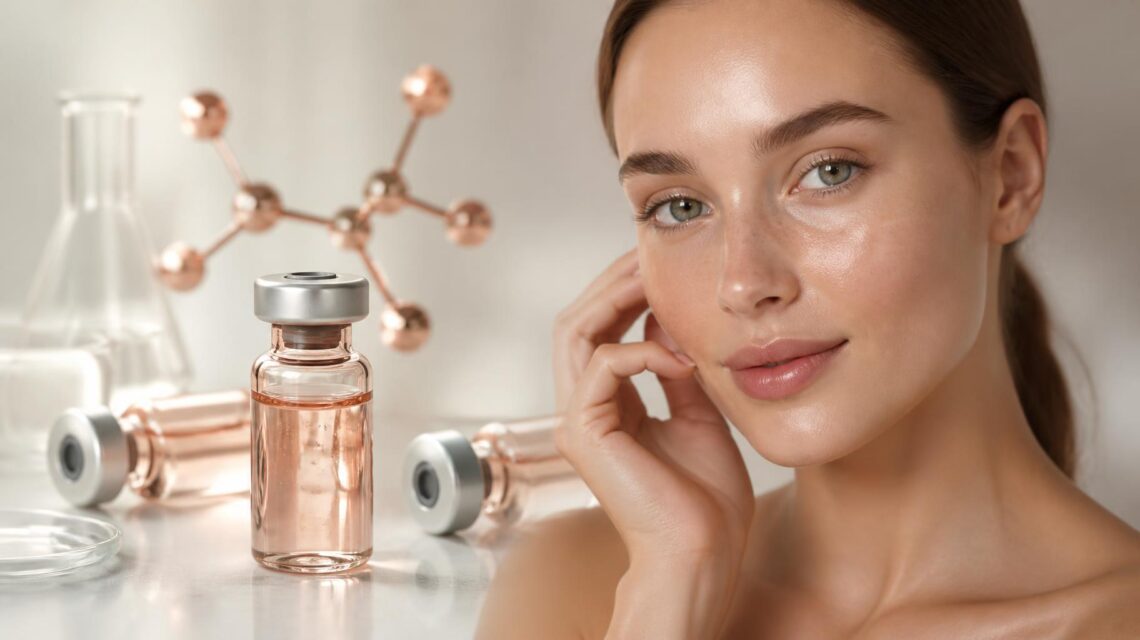
Copper peptides have become a popular ingredient in modern skin care, especially in products marketed for firmness, texture and visible signs of aging. Now, a more controversial version of the trend is gaining attention: injectable copper peptides. Social media posts and aesthetic clinics may promote these injections as a way to support collagen production, improve skin quality or accelerate recovery. However, dermatologists caution that the science, safety and regulation surrounding injectable copper peptides are not the same as those associated with topical skin care.
Before considering this treatment, it is important to understand what copper peptides are, how they differ from established cosmetic procedures and why medical supervision matters.
What Are Copper Peptides?
Copper peptides are naturally occurring compounds made from a peptide, which is a short chain of amino acids, bonded to copper. One of the most discussed forms in skin care is copper tripeptide-1, sometimes listed as GHK-Cu on product labels.
In laboratory and cell-based research, copper peptides have been associated with several biological processes involved in skin repair. These include supporting extracellular matrix proteins, influencing wound-healing pathways and helping regulate inflammatory responses. Because collagen and elastin are essential for skin structure, copper peptides are often included in products designed to improve the appearance of fine lines, roughness and loss of firmness.
However, results seen in laboratory studies do not automatically translate into proven benefits from injections in people. The concentration, formulation, method of delivery and quality of the product can all affect outcomes.
Topical Copper Peptides Versus Injectable Copper Peptides
Topical copper peptide products are applied to the surface of the skin. They are commonly found in serums, creams and treatment lotions. These products are formulated for cosmetic use and are generally considered less invasive than injections, although they can still cause irritation or allergic reactions in some people.
Injectable copper peptides are delivered beneath the skin or into tissue. This changes the safety profile considerably. An injectable product must be sterile, accurately dosed and manufactured according to appropriate pharmaceutical or medical standards. It must also be prescribed and administered by a qualified medical professional when it is legally available for that purpose.
A topical product and an injectable product should never be treated as interchangeable. A serum intended for external use must not be injected. Likewise, a product sold online as a research chemical or compounded preparation may not have the quality controls, labeling or clinical evidence expected of an approved medicine.
Why Is the Injectable Copper Peptide Trend Growing?
The popularity of injectable copper peptides is being driven largely by online beauty culture. Influencers, wellness clinics and aesthetic providers may describe these treatments as a method for boosting skin regeneration from within. Some promotions also connect injectable copper peptides with broader claims about recovery, hair growth, body composition or longevity.
These claims can sound appealing because they use scientific terminology and refer to genuine biological processes. Copper is involved in normal enzyme activity, and peptides play important roles in communication between cells. However, this does not mean that injecting additional copper peptides will reliably produce a cosmetic benefit.
Dermatologists are concerned when marketing language moves faster than clinical evidence. A treatment may be biologically interesting without being proven safe or effective for routine cosmetic use. The absence of large, well-designed human studies makes it difficult to determine the best dose, treatment schedule, long-term risks and appropriate patient selection.
What Does the Evidence Show?
Research into copper peptides has included laboratory experiments, animal studies and smaller human investigations. Some studies suggest that topical copper peptide formulations may help support the appearance of skin quality when used consistently. Still, evidence for injectable copper peptides remains limited compared with established dermatology treatments such as prescription retinoids, botulinum toxin, injectable fillers, chemical peels and laser procedures.
There is also no universally accepted injectable copper peptide protocol for facial rejuvenation. Questions remain about how much should be used, how often it should be administered, where it should be injected and which patients may face increased risks.
For these reasons, patients should be cautious about claims that injectable copper peptides are proven to rebuild collagen, erase wrinkles or produce dramatic anti-aging results. A responsible provider should explain what is known, what is uncertain and whether the product is approved for the proposed use.
Potential Risks and Side Effects
Any injection can cause complications. Possible short-term effects may include redness, swelling, tenderness, bruising and itching at the injection site. These reactions may resolve on their own, but they can also become more severe.
Potential risks may include:
- Infection, particularly if sterile technique is not maintained
- Allergic or hypersensitivity reactions
- Persistent lumps, nodules or inflammation
- Skin discoloration or prolonged redness
- Damage to nearby blood vessels or nerves
- Unexpected tissue injury from incorrect injection technique
- Uncertain effects from impurities, contamination or inaccurate dosing
There may also be additional concerns related to copper metabolism. People with certain liver conditions, kidney problems or disorders affecting copper storage should not assume that these treatments are suitable. Anyone with a known metal sensitivity, active skin infection or complex medical history should discuss the risks carefully with a doctor.
Seek urgent medical attention after an injection if you develop severe pain, rapidly increasing swelling, spreading redness, fever, difficulty breathing, facial weakness, vision changes or skin that becomes pale, dusky or unusually cold.
Are Injectable Copper Peptides Approved?
Regulatory status can vary depending on the country, the specific product and the intended use. A substance may be available through a clinic or compounding pharmacy without having approval from a national regulator for cosmetic skin rejuvenation. Availability does not necessarily confirm effectiveness or long-term safety.
Patients should ask for the exact product name, manufacturer, ingredients, source, expiration date and regulatory status. If a provider is unable or unwilling to provide this information, that is a significant warning sign. Treatments marketed as secret formulas, private-label injections or products for research use only require particular caution.
It is also important to distinguish a licensed medical practice from an unregulated beauty setting. Injections should not be performed in a home, hotel, salon or other environment that cannot demonstrate appropriate medical hygiene and emergency procedures.
Questions to Ask Before Treatment
A consultation with a board-certified dermatologist or another appropriately qualified medical professional is the safest starting point. Consider asking:
- Is this product approved for injection and for the purpose being recommended?
- What clinical evidence supports its use for facial or skin rejuvenation?
- Who will administer the injection, and what training do they have?
- What are the common and serious risks?
- Are there safer, better-studied alternatives for my concern?
- How will complications be managed if they occur?
- What ingredients and preservatives are in the formulation?
- Are there conditions or medicines that make this treatment unsuitable?
A trustworthy clinician should not pressure you to book quickly or promise guaranteed results. They should take a full medical history, examine your skin and provide realistic expectations.
Safer Options for Supporting Skin Quality
For many people, a conservative skin care routine can provide meaningful improvement without the risks associated with injections. Daily broad-spectrum sunscreen is one of the most effective ways to prevent collagen breakdown and visible premature aging. A well-formulated moisturizer can support the skin barrier, while a topical retinoid may help improve fine lines, uneven texture and acne when appropriate.
Topical copper peptide products may be an option for some individuals who want to explore this ingredient. Patch testing is sensible, particularly for people with sensitive skin. Introduce one new product at a time and stop using it if burning, swelling or a persistent rash develops.
Dermatology treatments with stronger clinical support may include prescription retinoids, microneedling, fractional laser procedures, chemical peels and selected injectable treatments. The best choice depends on skin type, medical history, treatment goals and tolerance for downtime.
The Bottom Line on Injectable Copper Peptides
Injectable copper peptides are an emerging trend, but they should not be confused with established or fully proven anti-aging treatments. While copper peptides have interesting biological properties and may have a role in topical skin care, the evidence for injection-based cosmetic use remains limited.
The safest approach is to avoid products purchased from unverified online sources and to seek advice from a qualified dermatologist before considering treatment. Ask about regulatory approval, product quality, clinical evidence and possible alternatives. A thoughtful, medically supervised plan is more valuable than a fast solution promoted through social media.
Healthy skin does not require following every new injectable trend. Consistent sun protection, appropriate skin care and evidence-based professional treatments remain the most reliable foundation for long-term skin health.