The beauty supplement market is evolving fast, and one of the biggest shifts in recent years is the growing interest in peptides as a beauty-from-within solution. For a long time, collagen dominated conversations around ingestible beauty, promising support for skin elasticity, hydration, and a more youthful-looking complexion. Now, peptides are stepping into the spotlight as consumers look for more targeted, science-led, and multifunctional ingredients that go beyond traditional collagen products.
This change reflects a broader movement in wellness and personal care. Today’s consumers are more informed, more ingredient-conscious, and more focused on formulations that align with their individual beauty and health goals. Rather than relying on one hero ingredient, they are increasingly exploring smarter, more bioactive compounds that may support the skin, hair, and body in more precise ways. That is where peptides are gaining attention.
Why Peptides Are Gaining Momentum In Beauty From Within
Peptides are short chains of amino acids that act as building blocks for proteins in the body. Because proteins such as collagen, elastin, and keratin are essential for the structure and appearance of skin, hair, and nails, peptides have become especially relevant in the beauty industry. Unlike broader protein ingredients, peptides are often discussed for their targeted biological activity, which makes them appealing to both formulators and consumers.
In beauty-from-within products, peptides are being used to support a range of claims, from improving skin firmness and smoothness to helping reinforce the body’s natural repair and renewal processes. This more sophisticated positioning has helped peptides move beyond niche status and into the mainstream wellness conversation.
Several factors are driving this trend:
- Consumer demand for efficacy and ingredients backed by scientific research
- Interest in personalized wellness and targeted supplementation
- Innovation in nutricosmetics, where beauty and nutrition increasingly overlap
- A desire for multifunctional products that support skin, hair, nails, and overall wellbeing
From Collagen Craze To Peptide Precision
Collagen supplements have enjoyed years of popularity, largely because they are easy for consumers to understand. Collagen is associated with youthful skin and strong connective tissue, and many beauty products have used this straightforward message to build trust. However, as the category matures, consumers are starting to ask more detailed questions. They want to know how ingredients work, how well they are absorbed, and whether they deliver specific results.
This is where peptides bring a new level of sophistication. While collagen still has a strong place in ingestible beauty, peptides are often positioned as a next-generation ingredient because they can be selected and formulated for more precise functions. Instead of simply adding collagen to a supplement, brands are now exploring specific peptide complexes designed to support skin resilience, barrier function, texture, or visible signs of aging.
The transition is not necessarily about peptides replacing collagen entirely. In many cases, it is about expanding the category and giving consumers more advanced options. Some formulations may even combine collagen and peptides, creating synergistic products that appeal to both traditional buyers and ingredient-savvy shoppers.
What Makes Peptides Appealing To Modern Consumers
The modern beauty consumer is doing more research than ever before. Social media, wellness podcasts, online reviews, and ingredient databases have changed the way people shop for supplements. This audience is less likely to be satisfied by vague promises and more likely to be drawn to products that sound innovative, measurable, and science-based.
Peptides fit neatly into this environment. They sound advanced, they can be associated with clinical language, and they allow brands to tell a more nuanced story around performance. For consumers interested in preventive beauty and healthy aging, peptides offer a compelling alternative to standard beauty claims.
Key reasons peptides resonate with today’s market include:
- They align with the trend toward bioactive ingredients
- They support premium product positioning
- They appeal to consumers seeking innovation
- They can be tailored to different beauty concerns
- They complement the holistic wellness movement
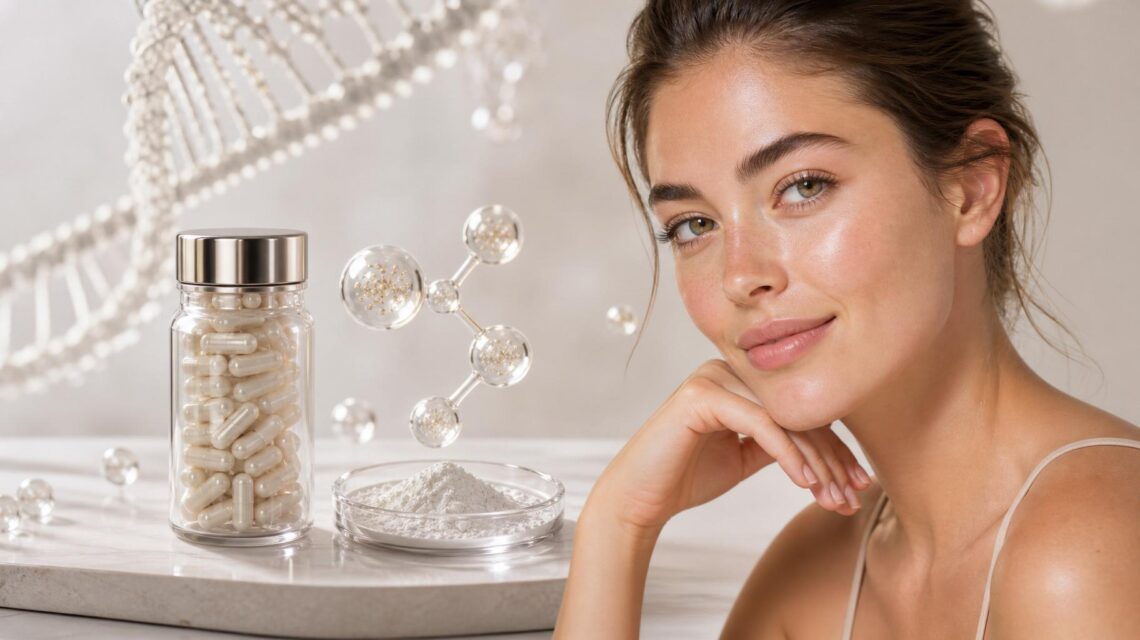
As a result, peptide-based beauty supplements are increasingly appearing in capsules, powders, drink mixes, and functional beverages. Their rise reflects not just a change in ingredients but a change in consumer expectations.
The Rise Of Nutricosmetics And Beauty From Within
The phrase beauty from within has moved from trend to established category, and peptides are becoming an important part of its next chapter. Nutricosmetics, which sit at the intersection of nutrition and personal care, are no longer limited to basic vitamins for skin support. The market now includes highly specialized blends that feature peptides, antioxidants, probiotics, hyaluronic acid, ceramides, and botanical actives.
This broader evolution matters because beauty is increasingly being viewed as a reflection of overall health, lifestyle, and internal balance. Consumers are not just trying to improve how they look. They are also seeking products that support confidence, longevity, resilience, and wellbeing from the inside out.
Within this context, peptides feel particularly timely. They fit naturally into supplement routines focused on healthy aging, active lifestyles, stress management, and recovery. For many brands, this opens the door to cross-category innovation where beauty products no longer stand alone but become part of a wider wellness ecosystem.
How Brands Are Positioning Peptides In The Market
As peptides gain traction, brands are becoming more strategic in how they communicate their value. Marketing is moving away from broad anti-aging language and toward messages centered on performance, skin quality, and long-term support. This allows peptide products to feel more modern, credible, and aligned with current wellness narratives.
In product development, peptides can be positioned in several ways:
- As a premium alternative to conventional beauty supplements
- As part of a targeted skincare routine taken internally
- As a daily healthy-aging solution
- As a multifunctional ingredient supporting beauty and recovery
- As a scientific upgrade to collagen-focused formulations
This marketing flexibility is one reason peptides are overtaking collagen in trend discussions. They give manufacturers and retailers more room to innovate, differentiate, and command premium pricing in a crowded category.
Challenges And Considerations In The Peptide Boom
Although the momentum behind peptides is strong, the trend also comes with challenges. Consumer understanding varies widely, and not everyone knows what peptides are or how they differ from proteins, amino acids, or collagen. This means education will play a major role in the success of peptide-based beauty products.
Brands will need to strike the right balance between making peptides sound innovative and keeping messaging accessible. Overly technical language may confuse shoppers, while oversimplified claims may fail to distinguish a product in a growing market.
There are also important considerations around:
- Ingredient sourcing and quality
- Clinical substantiation for benefit claims
- Bioavailability and formulation effectiveness
- Regulatory compliance in different markets
- Consumer trust and transparency
As with any supplement trend, long-term success will depend on whether products can consistently deliver visible and believable results. In a category tied so closely to personal appearance, expectations are high.
Will Peptides Replace Collagen Completely?
It is unlikely that collagen will disappear from the beauty-from-within market any time soon. It remains one of the most recognized and commercially successful ingredients in ingestible beauty. However, what is changing is the hierarchy of innovation. Collagen may continue to serve as the familiar foundation, while peptides increasingly represent the cutting edge of product development.
Rather than a simple replacement story, the rise of peptides may be better understood as a sign of market maturity. Consumers are moving from basic single-ingredient solutions toward more advanced, layered, and customized formulations. In that environment, peptides have a strong advantage because they can be integrated into a wider variety of beauty and wellness concepts.
This makes them particularly attractive to premium brands, clinical wellness companies, and supplement innovators looking to shape the future of the category.
The Future Of Beauty Supplements
<