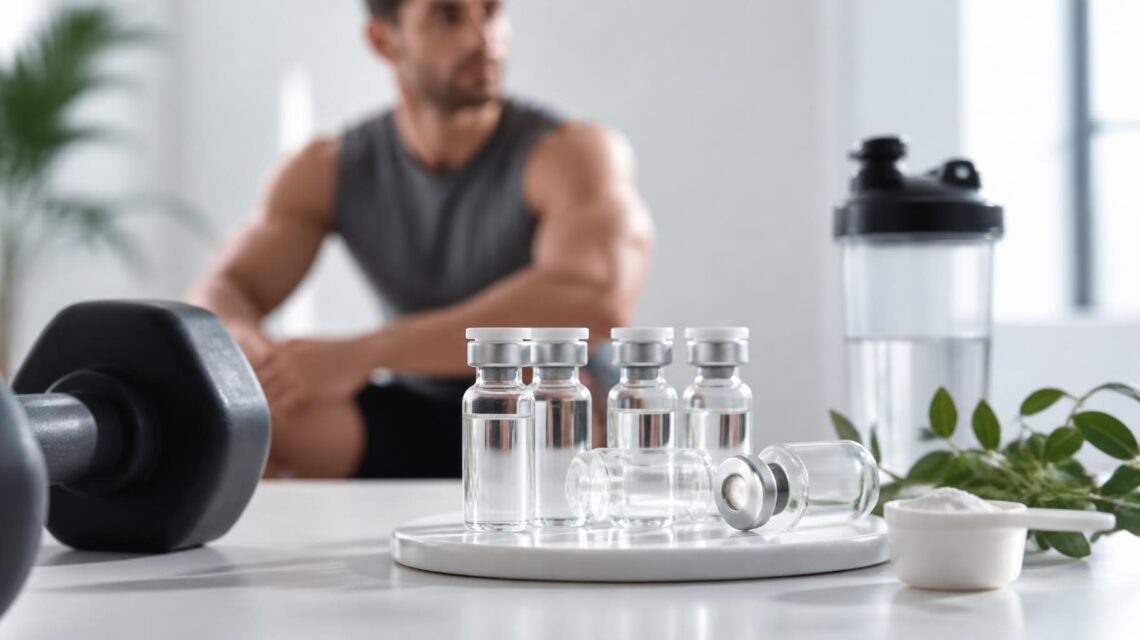
Peptides are short chains of amino acids that help regulate many processes in the body. In fitness and bodybuilding circles, they are often discussed as potential tools for supporting muscle recovery, training performance, sleep, and body composition. However, the phrase best peptides for muscle growth can be misleading because many products marketed for this purpose have limited human research, are not approved for muscle building, or may carry significant safety risks.
Some peptides influence growth hormone pathways, while others are studied for tissue repair or inflammation. Their effects can vary widely depending on the compound, dose, product quality, and a person’s health history. Anyone considering a peptide should speak with a qualified healthcare professional before use, particularly because products sold online may be mislabeled, contaminated, or illegally marketed.
What Are Peptides?
Peptides are made from linked amino acids, much like proteins, but they are generally shorter in structure. The body naturally produces many peptides that act as signaling molecules. They may influence hormone release, appetite, immune function, blood vessel activity, and the repair of certain tissues.
In the context of muscle growth, peptide discussions usually focus on compounds that may affect growth hormone secretion or support recovery from exercise-related tissue stress. It is important to understand that supporting recovery is not the same as directly building muscle. Muscle hypertrophy still depends primarily on progressive resistance training, sufficient protein, adequate calories, sleep, and consistent programming.
How Peptides May Relate to Muscle Growth
Muscle growth occurs when training provides a stimulus that the body adapts to over time. Protein synthesis must exceed muscle protein breakdown, and the body needs enough energy and nutrients to support this process. Hormones and signaling molecules are involved, but changing one pathway does not automatically lead to meaningful or sustainable muscle gain.
Some peptides are investigated for their possible effects on:
- Growth hormone release and related signaling
- Recovery from exercise and soft-tissue stress
- Sleep quality, which is important for training adaptation
- Inflammation and tissue repair
- Body composition and fat metabolism
Research remains uneven. A peptide may show promising results in laboratory studies or small clinical trials without having strong evidence for muscle growth in healthy adults. Marketing claims often move faster than medical research, so it is essential to consider the quality of the evidence rather than relying on testimonials.
Peptides Commonly Discussed for Muscle Growth and Recovery
Growth Hormone-Releasing Peptides
Growth hormone-releasing peptides are a broad category of compounds designed to influence the release of growth hormone from the pituitary gland. Examples discussed in research and online fitness communities include certain growth hormone secretagogues and growth hormone-releasing hormone analogues.
These substances may affect growth hormone levels, but increased growth hormone does not necessarily equal increased muscle mass. Growth hormone can influence fluid balance, connective tissue, glucose metabolism, and other processes. Some compounds in this category are prescription medicines for specific medical conditions, while others are unapproved for human use.
Potential concerns may include swelling, joint discomfort, numbness or tingling, headaches, changes in blood sugar, and effects on insulin sensitivity. People with diabetes, a history of cancer, sleep apnea, or other hormone-related conditions may face additional risks. Medical supervision is particularly important because hormone-related side effects may not be obvious at first.
Ipamorelin
Ipamorelin is a growth hormone secretagogue frequently promoted as a peptide for recovery and body composition. It is often described as more selective than some older compounds, but that does not establish that it is safe or effective for muscle growth in healthy people.
Human evidence supporting improved muscle size or performance is limited. Products labeled as ipamorelin may also differ significantly in purity and concentration when purchased from unregulated sources. Anyone researching this compound should distinguish between theoretical mechanisms, animal data, and well-controlled human trials.
CJC-1295
CJC-1295 is a growth hormone-releasing hormone analogue that has been studied for its ability to influence growth hormone and insulin-like growth factor 1 levels. It is commonly marketed in fitness settings for muscle gain, fat loss, and recovery.
Although changes in hormone levels may occur, the long-term effects and practical benefits for resistance-trained adults are not well established. Possible risks associated with manipulating growth hormone pathways include water retention, altered glucose control, joint symptoms, and other endocrine effects. The quality of online products is also a major concern.
BPC-157
BPC-157 is an experimental peptide often promoted for tendon, ligament, muscle, and gastrointestinal recovery. Interest in it comes largely from laboratory and animal research, while high-quality human evidence remains limited.
It should not be presented as a proven treatment for sports injuries or a reliable muscle-building compound. Injuries such as tendon tears, strains, and persistent joint pain require proper assessment, diagnosis, and rehabilitation. Using an unapproved peptide instead of seeking medical care could delay recovery or allow a serious injury to worsen.
Thymosin Beta-4 and Related Compounds
Thymosin beta-4 is a naturally occurring peptide involved in cell movement and tissue-related processes. A related compound, often discussed in sports communities, is marketed for wound healing and soft-tissue recovery. However, claims about faster muscle repair or improved athletic performance are not supported by enough robust human research.
Because these products may be unapproved and obtained through informal channels, their contents and sterility cannot always be confirmed. Injection products carry risks such as infection, abscesses, allergic reactions, and improper dosing.
Are Peptides Legal and Approved for Muscle Growth?
The regulatory status of peptides varies by country and by compound. Some peptide-based medicines are approved for specific medical uses, but approval for one condition does not mean approval for muscle growth, athletic performance, or general recovery. Many products marketed to athletes are labeled for research use only and are not intended for self-administration.
Competitive athletes should also be aware that certain peptides and growth hormone secretagogues may be prohibited under anti-doping rules. A product being available online does not guarantee that it is legal, safe, accurately labeled, or permitted in sport. Athletes should check current rules with their governing body and use qualified medical and anti-doping resources.
Potential Risks of Peptides for Muscle Growth
Peptide use can involve risks that are easy to underestimate. These may include both direct effects of the compound and problems caused by product quality or improper administration.
- Unpredictable dosing or contamination
- Infection from injections or poor storage
- Changes in blood sugar and insulin sensitivity
- Fluid retention, headaches, or joint discomfort
- Interactions with prescribed medications
- Unknown long-term effects on hormone regulation
- Possible allergic or immune reactions
- Regulatory and anti-doping consequences
People with diabetes, cardiovascular disease, cancer, endocrine disorders, liver or kidney problems, or a history of significant injuries should be especially cautious. A healthcare professional can help determine whether a symptom requires examination rather than experimental treatment.
Evidence-Based Ways to Support Muscle Growth
For most people, the most effective muscle-building strategy is not a peptide. It is a structured training and nutrition plan that can be followed consistently. Key foundations include:
- Progressive resistance training that gradually increases challenge
- Daily protein intake appropriate for body size and goals
- A balanced diet with sufficient calories and carbohydrates
- Seven to nine hours of quality sleep when possible
- Planned rest and recovery between demanding sessions
- Creatine monohydrate, when appropriate and cleared by a healthcare professional
- Medical evaluation for persistent pain, fatigue, or poor recovery
Creatine, adequate protein, and a well-designed resistance program have considerably stronger evidence for supporting strength and muscle development than most experimental peptides. Supplements should complement, not replace, training, nutrition, and recovery habits.
How to Evaluate Peptide Claims
When reading about the best peptides for muscle growth, look for evidence from randomized controlled human trials, transparent safety information, and clear regulatory status. Be cautious of websites promising dramatic gains, rapid healing, or no side effects. Testimonials and before-and-after photographs do not establish that a product caused the reported result.
It is also wise to avoid products that provide unclear ingredient lists, make disease-treatment claims, or encourage self-injection without medical guidance. A licensed clinician can discuss approved treatment options and help identify safer approaches to recovery and performance.
Final Thoughts
Peptides may have scientific potential in areas such as hormone signaling, tissue repair, and recovery, but most compounds promoted for muscle growth remain inadequately studied for healthy athletes and recreational lifters. Some are approved only for specific medical conditions, while others are experimental or unregulated.
The safest approach is to treat peptide claims with caution and prioritize proven fundamentals: progressive training, sufficient protein and calories, quality sleep, and appropriate medical care. If you are considering a peptide for recovery or muscle growth, discuss the risks, evidence, legality, and alternatives with a qualified healthcare professional before making a decision.