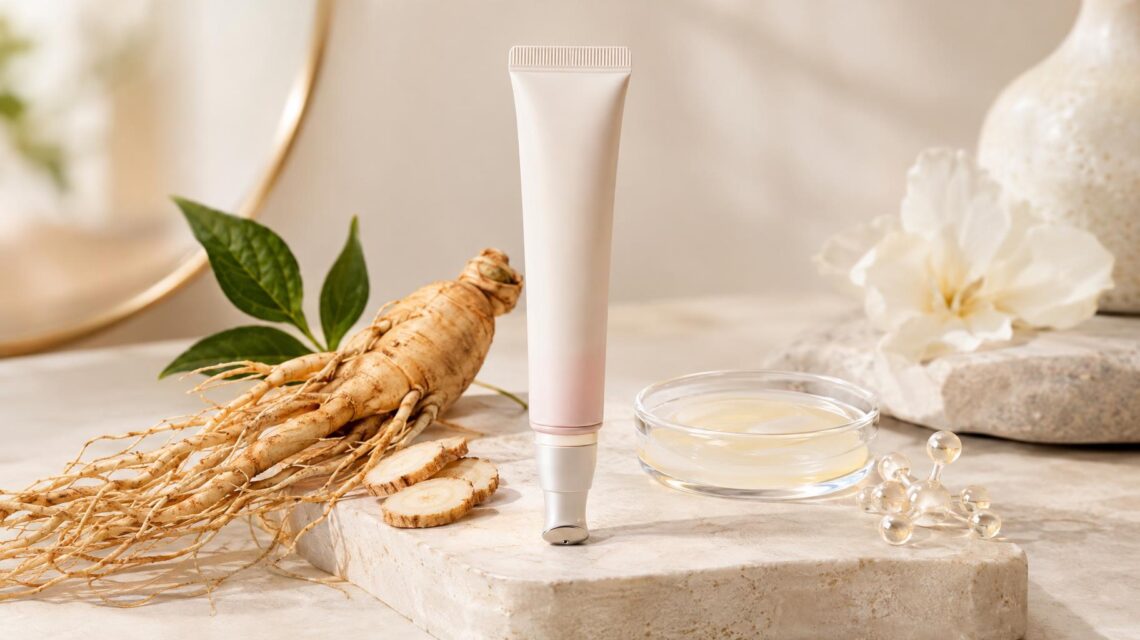
The Beauty of Joseon Revive Eye Serum brings together familiar Korean skincare ingredients and a vitamin A derivative in a formula designed for the delicate eye area. Ginseng and retinal take centre stage, but a closer look at the ingredient list reveals another detail worth knowing: palmitoyl tripeptide-5, a peptide that gets less attention than the headline actives.
Does that combination make it worth adding to your skincare routine? This ingredient-led review explores the formula, the limits of the brand-reported testing, and the practical considerations behind the buzz. It is not a personal wear test, and the information below should not be treated as medical advice.
What Is Beauty of Joseon Revive Eye Serum?
Beauty of Joseon Revive Eye Serum: Ginseng + Retinal is an eye-area skincare product built around a blend of botanical extract, retinal and supporting moisturising ingredients. Rather than relying on a single hero ingredient, it combines several components commonly found in formulas aimed at improving the appearance of mature or tired-looking skin.
The serum comes in a 30 ml size. The supplied brand listing shows a $17 list price and sold-out status, while Oh My Cream lists it at £22. Prices and availability can change, so check the relevant store before purchasing.
Its appeal is straightforward: a recognisable ingredient combination, a generous-looking format for an eye product, and accessible positioning. However, an appealing ingredient list does not establish how much visible change any individual will experience.
Beauty of Joseon Revive Eye Serum Ingredients
The most useful way to assess this formula is to separate its headline ingredients from the supporting cast. Ginseng and retinal explain the product name, but niacinamide, adenosine, ceramide NP and sodium hyaluronate also deserve attention.
Panax Ginseng Root Extract
Panax ginseng root extract gives the serum its botanical identity. It also connects the formula with the traditional ingredient story that runs through much of the Beauty of Joseon range.
Ginseng is a compelling ingredient to see in an eye serum, but its presence should not be treated as proof of a particular result. The supplied references do not isolate its contribution within this finished formula. Any assessment of the product therefore needs to consider the complete blend rather than crediting ginseng alone.
Liposomal Retinal
Retinal is the vitamin A ingredient behind much of the interest in this serum. The formula uses liposomal retinal, making it distinct from products marketed around retinol or other vitamin A derivatives.
Those names are not interchangeable. Equally, the term liposomal should not be read as a guarantee of superior results or irritation-free use. The supplied information identifies the ingredient format, but it does not establish how this product compares with every other retinal eye formula.
The important takeaway is that this is an active-led eye product, not simply a basic moisturiser. That distinction matters when considering personal tolerance and whether the formula suits an existing skincare routine.
The Hidden Peptide: Palmitoyl Tripeptide-5
The less obvious ingredient is palmitoyl tripeptide-5, which appears on the INCI ingredient list. It is not the headline attraction, yet its inclusion makes the formula more interesting for shoppers comparing peptide and retinal eye products.
Hidden does not mean secret or undisclosed. It simply means the peptide receives less attention than ginseng and retinal. Its percentage is not disclosed in the supplied references, so there is no sound basis for estimating its concentration or assigning it a specific share of the reported results.
This is where ingredient-led reviews need restraint: finding a noteworthy peptide is useful, but it does not turn the finished product into a clinically proven peptide treatment.
Supporting Ingredients
The formula also includes:
- Niacinamide, a familiar ingredient in multi-benefit skincare formulas.
- Adenosine, another component relevant to the serum’s appearance-focused positioning.
- Ceramide NP, which adds a barrier-care element to the ingredient list.
- Sodium hyaluronate, a moisture-binding ingredient commonly used in hydrating skincare.
Together, these ingredients suggest a formula that considers moisturisation alongside its headline actives. They do not, however, guarantee comfort for every user or establish that the serum will suit sensitive eyes.
What Do the Brand Test Results Actually Show?
Beauty of Joseon reports a 8.65% reduction in wrinkles after two weeks in a test involving 21 participants. This is a brand-reported result for the product, not a promise that every purchaser will experience the same change.
The supplied material does not provide enough methodological detail to fully evaluate that figure. Relevant questions include how wrinkles were assessed, whether a comparison group was used, and how consistent the results were across participants.
The Eye Patch Combination Needs Separate Context
A separate brand-reported test involved 22 participants using the serum together with the Revive eye patch over four weeks. Reported changes were:
- 28.1% reduction in wrinkles.
- 40.07% reduction in under-eye bags.
These numbers should not be presented as results for the serum alone. Because the test involved two products, it does not show how much either product contributed individually. It also cannot establish that the serum treats every cause of under-eye puffiness.
The fairest conclusion is that the brand reports encouraging cosmetic findings, but the small participant groups and limited supporting detail call for realistic expectations.
Can It Help With Dark Circles or Under-Eye Bags?
Searches for Beauty of Joseon Revive Eye Serum often centre on dark circles, lines and puffiness. These concerns are frequently grouped together, although they are not interchangeable.
The supplied references include wrinkle measurements and an under-eye bag result from the combined serum-and-patch test. They do not provide a specific dark-circle result. It would therefore be misleading to describe this serum as a proven dark-circle solution.
A useful purchasing question is whether you want an active-led cosmetic eye product, rather than a guaranteed answer to every under-eye concern.
Safety and Suitability Considerations
Beauty of Joseon advises avoiding this product during pregnancy and breastfeeding because it contains retinal. That brand warning is an important part of assessing suitability, not a minor footnote.
The eye area also deserves particular care. An eye-serum label does not mean a formula cannot cause discomfort, and individual tolerance cannot be predicted from an ingredient list alone. Follow the current packaging directions and warnings, and seek qualified guidance for personal suitability questions, especially where an existing skin or eye condition is involved.
Is Beauty of Joseon Revive Eye Serum Worth It?
On paper, the strongest case for this serum is its combination of ginseng, liposomal retinal, a disclosed peptide and moisturising support ingredients. The 30 ml size and listed price also make it worth considering when comparing eye products.
The supplied brand listing shows a rating of approximately 4.8 out of 5 from around 2,900 reviews. That indicates substantial customer engagement, but reviews are subjective and are not a substitute for controlled evidence.
Overall, Beauty of Joseon Revive Eye Serum is an interesting option for shoppers seeking a retinal-based eye formula with more than one noteworthy ingredient. Its hidden peptide adds interest, not certainty. The most balanced verdict is to appreciate the formulation while keeping the brand testing, safety warnings and limits of cosmetic claims firmly in view.
Sources