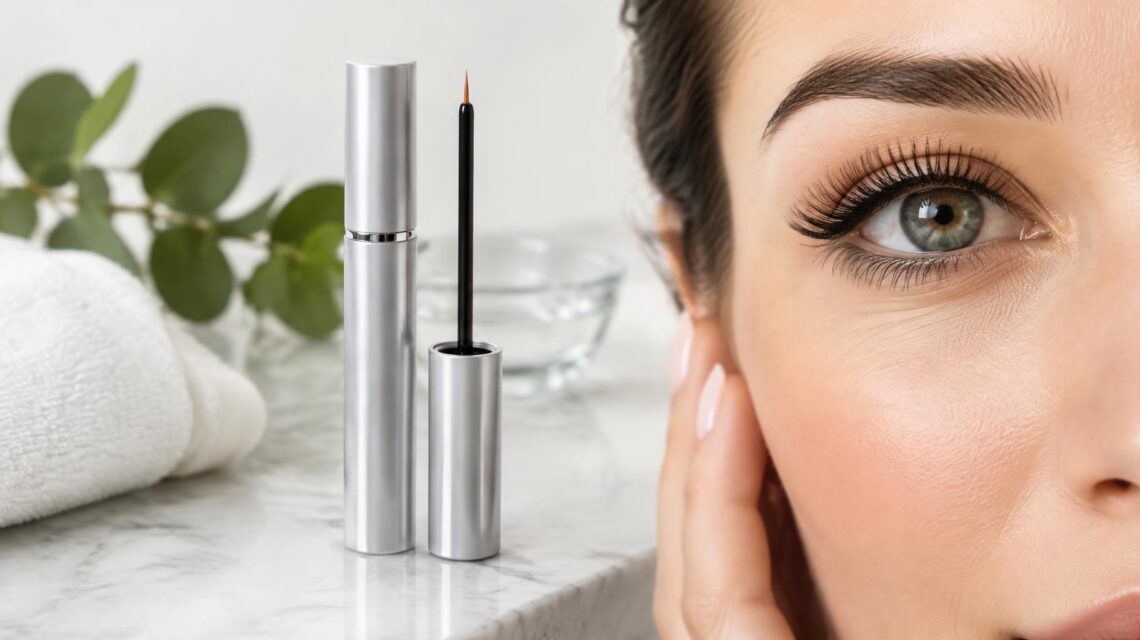
Longer-looking lashes are an appealing promise, especially if you would rather simplify your beauty routine than rely on extensions or layers of mascara. That appeal explains the interest in Nanolash Peptide Eyelash Serum. But does a peptide eyelash serum actually make lashes longer, or does the marketing move faster than the evidence?
The honest answer depends on the exact formula, the evidence behind it, and what you mean by longer lashes. A conditioning effect is not the same as demonstrated lash growth. This review takes an evidence-conscious look at the product category without assuming that promotional claims equal proven results.
What to Know About Nanolash Peptide Eyelash Serum
Nanolash Peptide Eyelash Serum is the product under discussion, but no verified ingredient list, manufacturer documentation, or product-specific research was supplied for this review. That matters: it would be misleading to describe its precise formulation, promise a results timeline, or claim that it has passed particular safety tests.
This is therefore a critical product overview, not a hands-on testimonial or confirmation of effectiveness. Before evaluating any lash serum, check that the packaging and ingredient information correspond to the exact product being purchased. Products with similar names are not necessarily interchangeable, and an ingredient discussion about one formula cannot automatically be applied to another.
What Are Peptides in Eyelash Serums?
Peptides are short chains of amino acids. In cosmetics, different peptides are included for different formulation purposes. The word peptide describes a broad ingredient category rather than a single substance with one predictable effect.
That distinction is important when reading eyelash serum advertising. A formula containing a peptide does not automatically establish that it lengthens eyelashes. The identity of the ingredient, its role within the formula, and research on the finished product all matter.
Ingredient Appeal Versus Product Evidence
A familiar or scientifically interesting ingredient can make a product sound persuasive. However, research on an isolated ingredient is not equivalent to research on a finished eyelash serum. Likewise, findings from another application cannot necessarily demonstrate what will happen when a product is used around the lash line.
For Nanolash Peptide Eyelash Serum, the useful question is not simply whether peptides sound promising. It is whether reliable evidence supports the specific claims made for the exact formula.
Longer Lashes, Really? Understanding the Claim
The phrase longer lashes can describe several different things. It might refer to objectively measured length, a more defined appearance, or lashes that look more noticeable in photographs. Those outcomes should not be treated as equivalent.
A cosmetic product may be marketed around conditioning or improving appearance. That does not, by itself, establish a biological effect on lash growth. Without verified product-specific evidence, actual lengthening remains an unconfirmed claim in this review.
Why Before-and-After Photos Need Context
Before-and-after photographs can be useful, but they are not conclusive on their own. Lighting, camera distance, mascara, lash curling, and image selection can all influence how eyelashes appear.
More informative comparisons use consistent conditions and explain how results were assessed. Even then, photographs should support a clearly described evaluation rather than substitute for one. A dramatic image on a sales page is a reason to investigate, not a guarantee of the same experience.
How to Evaluate the Ingredient List
The full ingredient list is a better starting point than a headline claim. Because the Nanolash formula has not been verified here, this article cannot confirm which peptides, conditioning ingredients, preservatives, or other substances it contains.
When comparing lash serums, look for transparent information about:
- Ingredient identity: Are the ingredients listed clearly rather than described only through a proprietary marketing name?
- Formula purpose: Does the brand distinguish cosmetic conditioning from claims about growth?
- Supporting evidence: Is research available for the finished product or only for selected ingredients?
- Warnings: Are limitations and eye-area precautions easy to find?
- Product consistency: Does the information match the packaging and version being sold?
These checks will not prove effectiveness, but they make it easier to separate useful product information from vague promises.
What Would Make the Evidence Convincing?
A strong Nanolash Peptide Eyelash Serum review should explain what supports its conclusions. Customer enthusiasm, attractive packaging, and scientific terminology are not substitutes for a well-described evaluation.
Useful research would identify the exact formula tested, describe the participants and assessment methods, and distinguish measured changes from subjective impressions. It would also explain limitations and report unwanted effects rather than highlighting only favourable findings.
Be Cautious With Broad Testing Claims
Terms such as clinically tested or dermatologist tested need context. They do not tell you, by themselves, what was tested, which outcomes were examined, or whether the results support longer-lash claims.
No product-specific trial results, approval status, or testing documentation were provided here. Consequently, this review does not assign a success rate, predict when changes might appear, or describe Nanolash Peptide Eyelash Serum as clinically proven.
Eye-Area Safety Deserves Attention
Any product intended for use near the eyes deserves careful scrutiny. Cosmetic positioning does not mean that a formula will suit everyone, and peptide branding does not establish that the complete product is free from irritation concerns.
Safety depends on more than the featured ingredient. The entire formulation, product quality, intended use, and individual sensitivities are relevant. Claims such as gentle, natural, or suitable for sensitive eyes should therefore be evaluated against the available documentation.
This article is informational, not medical advice, and it does not provide application or dosing instructions. Product labelling and qualified professional guidance are the appropriate sources for individual safety questions, particularly when existing eye conditions or sensitivities are involved.
Nanolash Peptide Eyelash Serum: Potential Appeal and Limitations
The appeal of a lash serum is easy to understand: it offers a different approach from the immediate visual effect of makeup. Whether that approach represents good value depends on what the specific product can substantiate.
What Could Make It Worth Considering?
- Clear, accessible information about the complete formula.
- Realistic cosmetic claims that avoid guaranteed transformations.
- Transparent evidence explaining how any reported results were assessed.
- Packaging and product information that clearly communicate intended use and warnings.
What Should Give Buyers Pause?
- Growth claims presented without accessible supporting evidence.
- Testimonials treated as proof that everyone will experience similar results.
- Unclear distinctions between ingredient research and finished-product testing.
- Promises of dramatic changes within an unsupported timeframe.
Frequently Asked Questions
Does Nanolash Peptide Eyelash Serum Make Lashes Longer?
The materials available for this review do not establish that outcome. A reliable answer requires evidence for the exact product, not assumptions based on its name or the general popularity of peptides.
How Long Does It Take to See Results?
No verified timeline was supplied. Stating a particular number of days or weeks would be speculative. Any advertised timeframe should be checked against the research and conditions supporting it.
Is a Peptide Serum the Same as a Prescription Lash Treatment?
No. Cosmetic peptide serums and prescription treatments should not be assumed to share ingredients, mechanisms, evidence, or regulatory status. No medicinal approval is established for the product discussed here.
Final Verdict: Look Beyond the Longer-Lash Promise
Nanolash Peptide Eyelash Serum may attract attention from shoppers interested in lash-focused cosmetics, but its name alone cannot answer whether it delivers longer lashes. With no verified formula or product-specific research supplied, a confident effectiveness verdict would go beyond the evidence.
The most useful buying principle is simple: match the claim to the proof. Look for transparent ingredients, meaningful testing information, realistic expectations, and clear safety documentation. Until those details are available, treat the longer-lash promise as something to verify—not an established result.