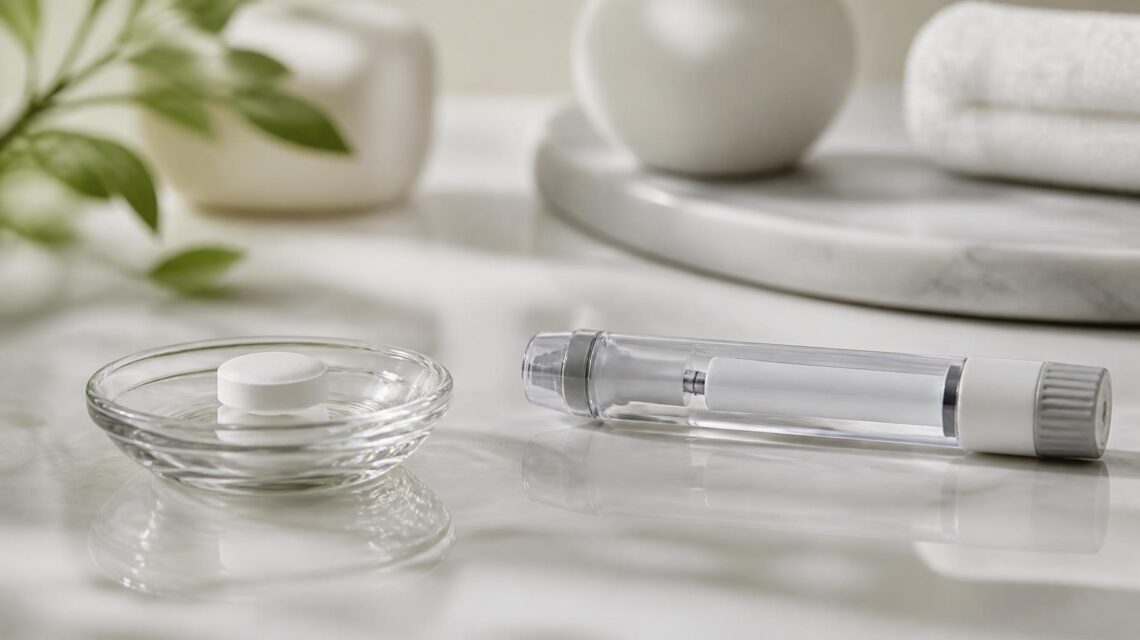
Orforglipron vs Tirzepatide: How the Pill Compares to the Injection
People interested in weight loss and blood sugar management often compare orforglipron vs tirzepatide. Both medicines belong to a newer generation of incretin-based treatments designed to reduce appetite, improve glucose control, and support weight loss. However, they differ in an important way: orforglipron is an oral, once-daily medication under investigation, while tirzepatide is an approved once-weekly injection for specific medical uses.
The possibility of taking a weight-loss medicine as a pill has attracted considerable attention. A tablet could be more convenient and less intimidating for people who prefer to avoid injections. At the same time, tirzepatide has already built a strong clinical record through approved products and large studies.
This comparison explains how the two medicines work, what clinical research suggests so far, and the practical differences patients should understand. Because orforglipron remains investigational, it should not be viewed as an approved alternative to tirzepatide until regulators complete their review.
What Is Orforglipron?
Orforglipron is an investigational oral medication developed by Eli Lilly. It is a nonpeptide glucagon-like peptide-1, or GLP-1, receptor agonist. Unlike injectable peptide medicines, its chemical structure is designed to be absorbed as a daily tablet.
GLP-1 receptor agonists mimic the effects of a naturally occurring gut hormone. They can slow the movement of food through the stomach, increase feelings of fullness, reduce appetite, and help the body release insulin when blood sugar levels rise. These effects may support both weight loss and improved blood glucose control.
Orforglipron is being studied for obesity, overweight with related health conditions, and type 2 diabetes. Clinical trial results have reported meaningful reductions in body weight and improvements in blood sugar, although the exact effectiveness, safety profile, dosing instructions, and approved uses will depend on future regulatory decisions.
As of now, orforglipron is not an FDA-approved treatment for weight loss or diabetes. Availability through unapproved online sources may involve significant safety and quality concerns.
What Is Tirzepatide?
Tirzepatide is a prescription medicine administered by injection once per week. It is sold under the brand name Mounjaro for adults with type 2 diabetes and Zepbound for chronic weight management in eligible adults with obesity or overweight and at least one weight-related health condition.
Tirzepatide is known as a dual GIP and GLP-1 receptor agonist. GIP stands for glucose-dependent insulinotropic polypeptide. By acting on both GIP and GLP-1 pathways, tirzepatide can influence insulin release, appetite, digestion, and energy balance.
In clinical trials, many participants taking tirzepatide experienced substantial weight loss when the medication was combined with a reduced-calorie eating pattern and increased physical activity. Results vary according to the dose, treatment duration, health status, and individual response.
Tirzepatide is approved for specific indications, but it is not appropriate for everyone. A healthcare professional must assess a person’s medical history, current medications, and potential risks before prescribing it.
Orforglipron vs Tirzepatide: Key Differences
The most obvious difference is the route of administration. Orforglipron is designed to be taken by mouth, while tirzepatide is injected under the skin once each week. However, the comparison involves more than convenience.
- Form: Orforglipron is an investigational daily pill; tirzepatide is an approved weekly injection.
- Drug action: Orforglipron targets the GLP-1 receptor, while tirzepatide targets both GIP and GLP-1 receptors.
- Regulatory status: Orforglipron has not yet received approval; tirzepatide is approved for certain diabetes and weight-management uses.
- Dosing schedule: Orforglipron is being studied as a daily medicine, whereas tirzepatide is typically administered once weekly.
- Evidence base: Tirzepatide has established real-world and long-term clinical experience, while research on orforglipron is still developing.
- Storage and handling: A tablet may be simpler to store than an injectable medicine, although final instructions for orforglipron will depend on its approved product information.
Which Is More Effective for Weight Loss?
It is difficult to make a direct, definitive comparison because orforglipron and tirzepatide have not been tested against each other in a large head-to-head trial. Comparing results from separate studies can be misleading because the participants, doses, treatment periods, lifestyle programs, and study designs may differ.
Early and mid-stage research on orforglipron has shown promising weight-loss results. Some participants achieved substantial reductions in body weight over the course of clinical studies. However, not every person responded in the same way, and trial findings do not guarantee that an individual will experience a similar result.
Tirzepatide has demonstrated significant average weight loss in large clinical trials involving adults with obesity or overweight. Higher maintenance doses have generally produced greater average weight reduction, although they may also increase the likelihood of side effects for some patients.
At present, tirzepatide has the stronger established evidence base for weight management. Orforglipron could become an important oral option if future studies confirm its effectiveness and regulators approve it, but it is too early to conclude that the pill is more effective than the injection.
How Do the Side Effects Compare?
Because both medicines affect appetite and digestion, their side-effect profiles may overlap. Gastrointestinal symptoms are among the most common concerns with incretin-based treatments.
- Nausea
- Vomiting
- Diarrhea
- Constipation
- Abdominal discomfort
- Reduced appetite
These effects are often more noticeable when treatment begins or when the dose increases. Healthcare professionals commonly use gradual dose escalation to help the body adjust.
Tirzepatide carries warnings and precautions relating to serious gastrointestinal reactions, gallbladder disease, pancreatitis, dehydration, and kidney problems that may result from severe vomiting or diarrhea. It also has a boxed warning concerning thyroid C-cell tumors based on findings in laboratory animals. People with a personal or family history of medullary thyroid carcinoma or multiple endocrine neoplasia syndrome type 2 are generally advised not to use it.
The full safety profile of orforglipron will become clearer as larger and longer clinical studies are completed. A medicine taken by mouth may avoid injection-site reactions, but it can still cause digestive side effects and other risks associated with GLP-1 therapy. Anyone considering either medication should discuss possible complications with a qualified healthcare professional.
Is the Pill More Convenient Than the Injection?
For some people, an oral medicine may feel easier to use. A daily tablet can eliminate needles, injection anxiety, and the need to learn injection technique. It may also appeal to people who travel frequently or prefer a familiar pill format.
However, daily dosing requires consistent adherence. Missing a tablet may be easier than missing a weekly injection, depending on a person’s routine. Oral medicines may also have specific instructions about when to take them, whether to take them with food, and what to do after a missed dose.
Tirzepatide requires a weekly injection, which some people find convenient because they do not need to remember a dose every day. The medication comes in prefilled devices designed to simplify administration. Still, needles, storage requirements, and injection technique can be disadvantages for certain patients.
The most convenient option depends on personal preference, lifestyle, insurance coverage, medical needs, and how consistently a person can follow the treatment plan.
Cost, Access, and Insurance Considerations
Cost can influence the decision between current and future treatment options. Tirzepatide may be covered for type 2 diabetes when prescribed under an approved indication, but coverage for obesity treatment varies by insurance plan. Copayments, deductibles, supply shortages, and prior authorization requirements can also affect access.
Because orforglipron is not approved, it does not currently have a standard prescription price or routine insurance coverage. If it receives approval, its cost and coverage will depend on the final product, indication, manufacturer pricing, and insurance policies.
Patients should be cautious about websites selling unapproved or compounded versions of medications without appropriate medical supervision. Products obtained from unreliable sources may contain the wrong dose, contaminants, or an entirely different ingredient.
Which Treatment May Be Right for You?
There is no universal answer to the question of whether orforglipron or tirzepatide is better. The appropriate treatment depends on factors such as:
- Whether the primary goal is diabetes control, weight management, or both
- Current weight, blood sugar levels, and other health conditions
- History of digestive problems, pancreatitis, gallbladder disease, or kidney disease
- Personal or family history of thyroid cancer syndromes
- Preference for a daily pill or weekly injection
- Insurance coverage and affordability
- Other prescription and over-the-counter medicines
For people who need an approved treatment today, tirzepatide may be considered when it is medically appropriate and prescribed by a healthcare professional. Orforglipron may eventually offer a useful oral alternative, but its benefits and risks must be confirmed through regulatory review and additional evidence.
The Bottom Line on Orforglipron vs Tirzepatide
Orforglipron and tirzepatide represent two different approaches to modern metabolic treatment. Orforglipron is an investigational daily GLP-1 pill that could appeal to people who prefer oral medication. Tirzepatide is an established weekly injection that acts on both GIP and GLP-1 pathways and is approved for specific diabetes and weight-management indications.
Tirzepatide currently has the advantage in terms of regulatory approval and depth of clinical evidence. Orforglipron is promising, but it should not be considered a proven or commercially approved replacement until further research and regulatory decisions are complete.
If you are considering medication for weight loss or type 2 diabetes, speak with a licensed healthcare professional. Treatment works best when medication is combined with appropriate nutrition, physical activity, regular monitoring, and ongoing medical support.