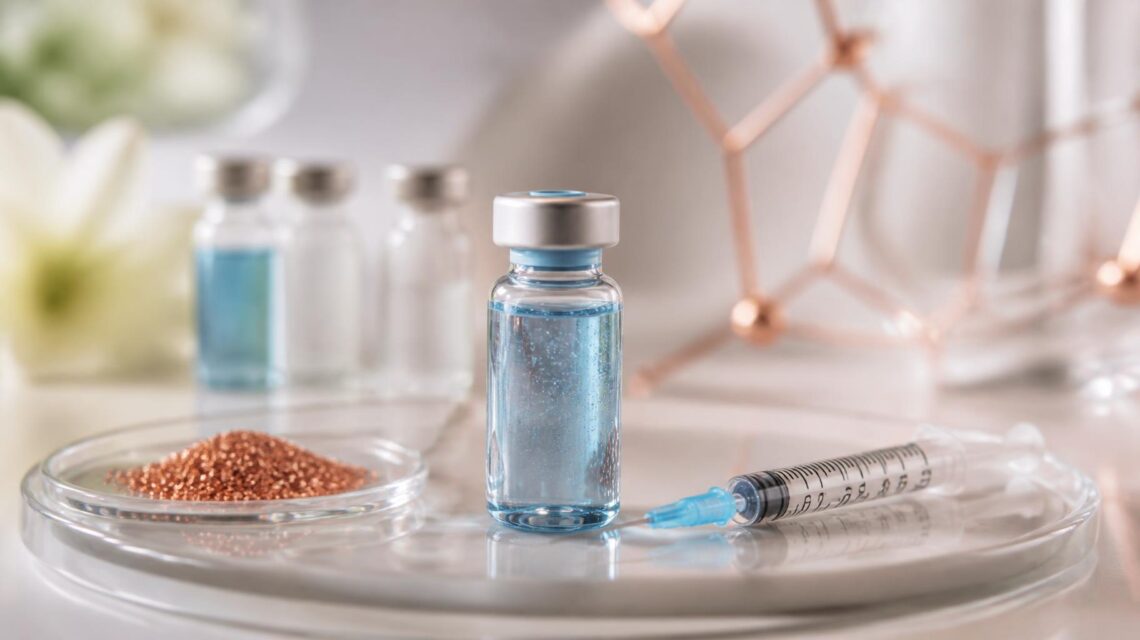
Copper peptide injections are gaining attention fast
Copper peptides have long been discussed in skincare circles, but a newer and more aggressive beauty trend is pushing them into a different category entirely: injectable copper peptide treatments. Promoted online as a shortcut to firmer skin, faster healing, improved hair growth, and even anti-aging benefits, these injections are being embraced by some beauty influencers and wellness communities before the science has fully caught up.
That gap between popularity and proof is what makes this trend so important to examine. While copper peptides do have a legitimate scientific background in topical skincare and wound-healing research, using them as injections is a much more serious matter. Once a compound moves from a cream or serum into the body through injection, the conversation changes from beauty marketing to questions of safety, dosing, clinical evidence, and medical oversight.
The excitement around copper peptide injections reflects a broader shift in the beauty industry. Consumers are increasingly drawn to treatments that promise visible results with a biotech edge. But with that speed comes risk, especially when social media enthusiasm begins to outpace peer-reviewed evidence.
What are copper peptides?
Copper peptides are small protein fragments bound to copper ions. One of the best-known forms is GHK-Cu, a naturally occurring copper peptide that has been studied for its potential role in skin regeneration, wound repair, inflammation control, and tissue remodeling. In topical products, it is often marketed for:
- Reducing the appearance of fine lines and wrinkles
- Supporting skin firmness and elasticity
- Improving skin texture
- Helping damaged or irritated skin recover
- Possibly encouraging healthier-looking hair and scalp conditions
In skincare, copper peptides are not exactly new. They have been included in serums, creams, and post-procedure products for years. Many dermatologists and cosmetic chemists view topical copper peptides as a promising category, especially when used alongside other evidence-based skincare ingredients.
However, topical use is not the same as injectable use. A serum applied to the surface of the skin behaves very differently from a substance introduced under the skin or into the body. That distinction is central to the concern now surrounding this trend.
Why copper peptide injections are trending now
The beauty and wellness market increasingly rewards treatments that sound scientific, exclusive, and fast-acting. Copper peptide injections fit neatly into that space. They combine the language of regenerative aesthetics with the prestige of peptide-based therapies, making them especially attractive to consumers looking for the next breakthrough.
Social media has accelerated interest. Videos and posts often frame these injections as advanced biohacking for skin, with claims ranging from collagen stimulation to accelerated rejuvenation. Some users describe them as part of a larger anti-aging stack that may include other peptides, supplements, and cosmetic procedures.
Several factors are fueling the rise of interest:
- Influencer-driven beauty culture that rewards novelty
- Growing demand for minimally invasive treatments
- Confusion between legitimate peptide science and speculative use
- Online access to injectable compounds through loosely regulated channels
- Consumer fatigue with traditional skincare and desire for faster results
In many cases, the marketing language surrounding copper peptide injections is aspirational rather than evidence-based. Terms like repair, regeneration, and renewal can sound medically grounded while still leaving important questions unanswered.
What the science actually says
The existing research around copper peptides is real, but it is often overstated when translated into beauty claims. Studies have explored how copper peptides may influence wound healing, collagen production, antioxidant activity, and tissue repair. This has made them interesting to researchers and skincare brands alike.
But there is an important limitation: most of the better-known evidence does not automatically validate widespread cosmetic injection use. Early or narrow findings should not be treated as proof that self-administered or off-label injectable treatments are safe or effective for aesthetic goals.
Scientific enthusiasm does not equal clinical consensus. For a beauty treatment to be responsibly recommended at scale, experts usually want to see:
- Well-designed human clinical trials
- Clear dosing standards
- Reliable safety data
- Evidence of consistent benefits
- Medical guidance for who should and should not use it
In the case of copper peptide injections, those standards remain incomplete. There may be biological potential, but potential is not the same thing as proof. That leaves consumers vulnerable to promotional claims that sound advanced while resting on limited clinical support.
The risks of moving too fast
Any injectable beauty treatment comes with a higher level of risk than a topical product. Once injections enter the picture, concerns expand beyond irritation or product compatibility. The issues can include contamination, improper administration, unexpected reactions, and uncertain long-term effects.
Some of the key concerns associated with copper peptide injections include:
- Unknown safety profile for routine cosmetic use
- Lack of standardized formulations across suppliers
- Potential contamination or quality-control problems in unregulated products
- Injection-site reactions, swelling, or inflammation
- Unclear interactions with medications, procedures, or underlying health conditions
- False confidence from anecdotal results shared online
Another serious issue is sourcing. Some consumers may buy peptide products online from research supply vendors or compounding sources that are not intended for casual cosmetic use. Labels may not always reflect purity, concentration, or proper storage requirements. Even if a product appears professional, that does not guarantee medical-grade consistency or safety.
In short, beauty trends often focus on the promised outcome, while medical experts focus on the pathway used to get there. With injectables, the pathway matters just as much as the result.
How beauty marketing can blur important lines
One reason copper peptide injections are gaining traction is that they sit at the intersection of wellness, skincare, and aesthetics. That crossover can make a treatment feel more familiar and less clinical than it really is. Consumers may think of copper peptides as simply an upgraded version of a serum they already know, rather than as an injectable intervention with a different risk profile.
Marketing can also blur the difference between:
- Topical skincare benefits and systemic effects
- Laboratory findings and proven real-world outcomes
- Professional supervision and DIY experimentation
- Potential regenerative properties and guaranteed anti-aging results
This is not unique to copper peptides. The modern beauty market frequently adopts scientific language before the science is settled. Peptides, stem cells, exosomes, growth factors, and regenerative aesthetics all carry a certain prestige. But consumers should be careful not to confuse innovation with established safety.
What experts want consumers to understand
Medical and skincare professionals are not necessarily dismissing copper peptides altogether. In fact, many see promise in peptide science. The real concern is that demand is growing faster than the evidence base, especially for injections used primarily for cosmetic purposes.
A cautious approach does not mean anti-innovation. It means recognizing that even biologically interesting compounds need rigorous testing before becoming mainstream beauty treatments. Experts generally encourage consumers to ask better questions before trying any injectable trend:
- Has this use been studied in humans for this specific purpose?
- Is the product coming from a reputable and regulated source?
- Is a licensed medical professional involved?
- Are the risks, side effects, and unknowns being clearly explained?
- Am I relying on influencer testimony more than clinical evidence?
These questions are especially important when an aesthetic treatment is being framed as both cutting-edge and easy to access. The more convenient a powerful treatment seems, the more
Related Reading
- GHK-Cu Explained: What Copper Peptides Actually Do to Skin
- Copper Peptides: The Underrated Blue Skin-Care Ingredient
- Pal-GHK for Youthful-Looking Skin: Potential Benefits
Sources
- Pickart L, Margolina A. Regenerative and Protective Actions of the GHK-Cu Peptide in the Light of the New Gene Data. International Journal of Molecular Sciences. 2018;19(7):1987. Link
Affiliate disclosure: this post contains affiliate links, and we may earn a commission if you purchase through them, at no extra cost to you.